

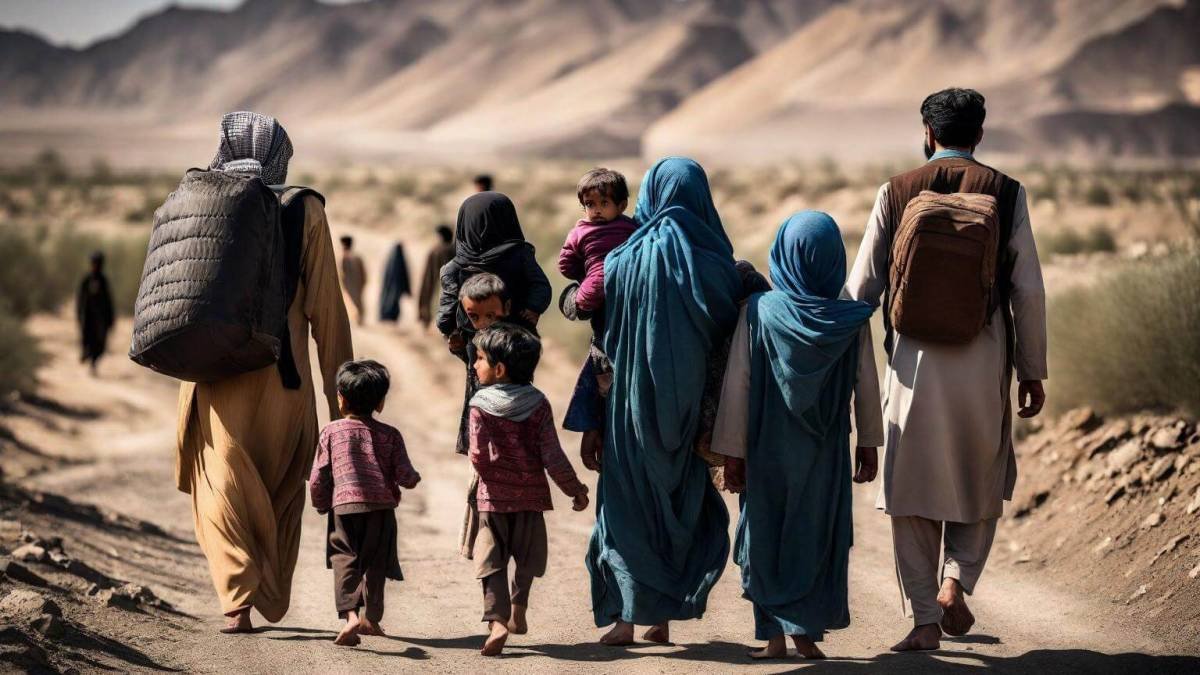

Khyber Pakhtunkhwa (KP) Chief Minister Ali Amin Gandapur announced on Friday that Afghan refugees in the province would not be deported forcibly. Speaking at a press conference in Islamabad, he stated, “No Afghan refugee will be expelled by force from KP. We oppose any forced deportation of Afghan refugees.”
His statement comes as the federal government proceeds with repatriating undocumented refugees and Afghan Citizen Card (ACC) holders, following the March 31, 2025, deadline for voluntary return.
Pakistan has hosted millions of Afghan refugees for nearly five decades. While many have returned to Afghanistan over the years, approximately 2.1 million remain in KP and other provinces. The government had set March 31 as the deadline for undocumented Afghans and ACC holders to leave the country due to growing security concerns.
CM Gandapur emphasized the province’s historical and cultural ties with Afghan refugees and assured that those opting for voluntary return would receive assistance to ensure a dignified departure. He further stated that diplomatic engagement was the best approach to managing relations with Afghanistan.
Criticizing the federal government, the chief minister said KP authorities were still waiting for approval of the terms of reference (TORs) to initiate talks with Afghanistan’s interim Taliban-led government. He reiterated that peace in the region depended on stability in Afghanistan and asserted that his party, Pakistan Tehreek-e-Insaf (PTI), had a comprehensive strategy to combat terrorism.
Addressing allegations from the federal government regarding the resurgence of militancy and the alleged resettlement of terrorists, Gandapur dismissed these claims as “highly irresponsible.”
Number of Afghan Refugees in Pakistan
According to official estimates, Pakistan hosts approximately 2.1 million Afghan refugees, both registered and undocumented. However, government figures suggest the total Afghan refugee population is around three million, all of whom are expected to be repatriated under the ongoing deportation plan.
Afghans residing in Pakistan fall into four categories:
- Registered Refugees – Around 1.3 million Afghans who fled instability in Afghanistan and were granted official refugee status. They were issued Proof of Registration (PoR) Cards in 2007, periodically renewed, with the current validity expiring on June 30, 2025.
- ACC Holders – Approximately 800,000 Afghans issued Afghan Citizen Cards (ACC) in 2016. These individuals are now being repatriated as part of the government’s deportation policy.
- Post-2021 Arrivals – Afghans who fled to Pakistan after the Taliban regained control in 2021. The Pakistani government initially estimated 600,000 arrivals, but UNHCR data shows only 200,000 were officially registered.
- Undocumented Migrants – Afghans who lack PoR or ACC status and are not recognized as asylum seekers. This category also includes individuals who obtained fraudulent Pakistani national identity cards. Over the past two years, Pakistan’s National Database and Registration Authority (Nadra) has been revoking such IDs through its National Verification and Renewal Drive.
