

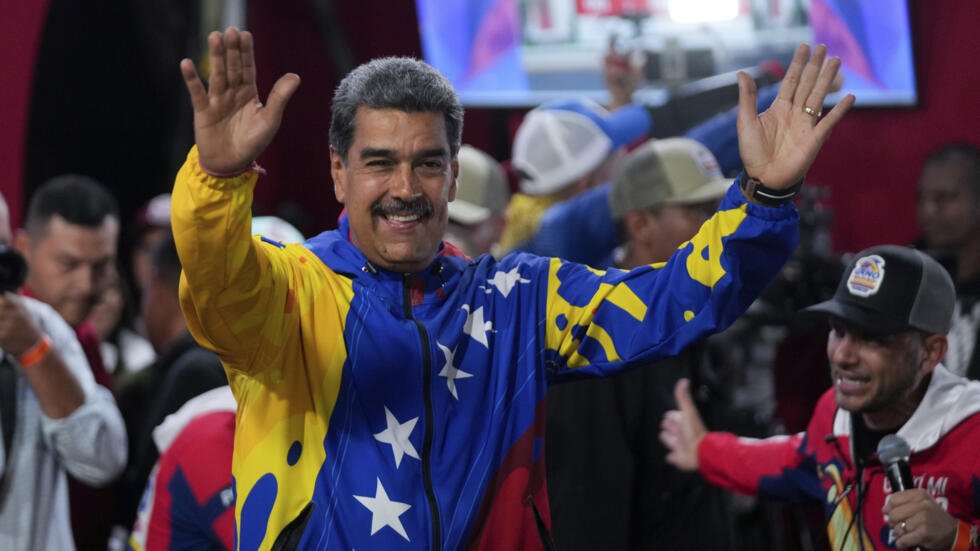

Venezuelan President Nicolás Maduro has been declared the winner of Sunday’s presidential election, securing a third term amid widespread allegations of electoral fraud and international skepticism.
Elvis Amoroso, head of Venezuela’s National Electoral Council (CNE), announced that Maduro won with 51.2 percent of the vote. His primary rival, Edmundo Gonzalez Urrutia, garnered 44.2 percent, according to the CNE.
The CNE, which has been criticized for its close ties to Maduro, did not provide detailed results from the 30,000 polling stations across the country.
Opposition figures have challenged these results, alleging that their own data from polling stations indicated a significant lead for Gonzalez. Maria Corina Machado, a prominent opposition leader who was excluded from the race, claimed Gonzalez won 70 percent of the vote and urged vigilance due to concerns about possible fraud during the vote-counting process.
Following the announcement, Maduro celebrated his victory as a win for peace and stability, defending the election process as transparent. “Our victory is a testament to the trust the Venezuelan people have placed in us,” Maduro said.
Maduro, who has been in power since 2013 after the death of his mentor Hugo Chávez, has faced accusations of human rights abuses and failing to address Venezuela’s prolonged economic crisis. This crisis has led to the emigration of over seven million Venezuelans in recent years.
The opposition campaigned on promises to address the country’s economic woes. Gonzalez, who replaced Machado on the opposition ticket after her disqualification, criticized the election’s integrity but stopped short of calling for violent protests.
The election was part of a previous agreement between the government and opposition, which led to a temporary easing of U.S. sanctions. However, the sanctions were reinstated after Maduro did not meet the agreed conditions. U.S. Secretary of State Antony Blinken expressed concerns about the election’s fairness and transparency, reflecting doubts from the European Union and other international observers.
Analysts have questioned the official results. Phil Gunson of the International Crisis Group noted discrepancies between the government’s reported figures and the votes cast, aligning with the opposition’s claims based on opinion polls. Francisco Rodriguez from Denver University stressed the importance of the opposition documenting and publicly presenting evidence of fraud.
International reactions were varied. Leaders from Costa Rica, Peru, Chile, and Uruguay criticized the election results as flawed, while Maduro received support from allies in Bolivia, Honduras, and Cuba. Cuban President Miguel Díaz-Canel praised Maduro’s victory, and China’s foreign ministry congratulated him on his re-election.
