

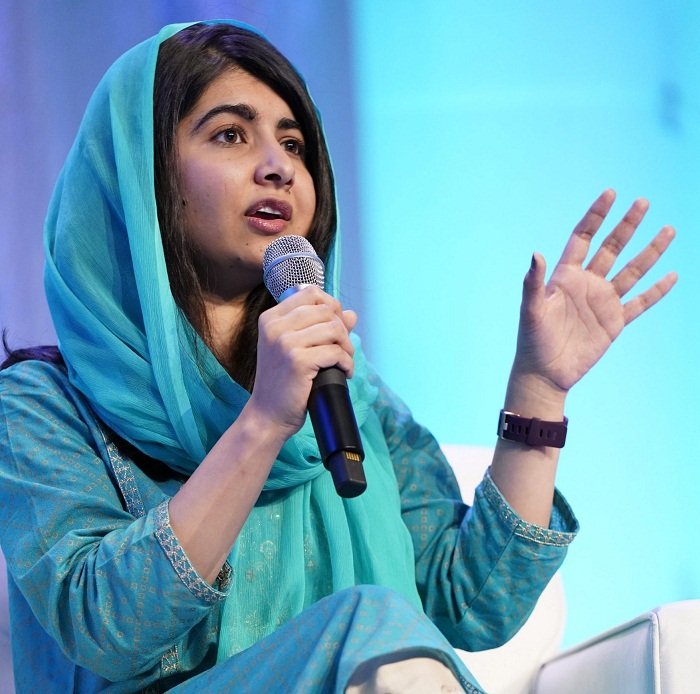

ISLAMABAD: The day following her annual Nelson Mandela lecture, Nobel laureate Malala Yousafzai emphasized the gravity of Afghanistan’s situation, characterizing the regime’s restrictions as virtually criminalizing being a girl.
In urging global nations, she called for refraining from normalizing relations with Afghanistan and emphasized the importance of standing in solidarity with Afghan women.
During her address in Johannesburg, Malala highlighted the numerous prohibitions imposed by the interim Afghan Taliban government, particularly the bans on secondary and university education for girls and women.
Drawing parallels to apartheid, she advocated for the recognition of “gender apartheid” as a crime against humanity, urging its international criminalization.
Malala urged governments, conference organizers, and UN officials to resist the normalization of relations with the Taliban.
She appealed to Pakistan, stating, “I would request Pakistan to stand firmly in support of Afghan women.”
Regarding Pakistan’s stance toward its neighbor, Malala stressed the importance of nations, including Pakistan, refraining from normalizing ties with Afghanistan and not overlooking the gender-based oppression occurring there.
Reflecting on the period of Talibanization and extremism in the Swat valley from 2007-2009, she underscored Pakistan’s role, noting that the situation also poses risks to women within Pakistan.
Malala emphasized Pakistan’s influential role in exerting pressure on the Taliban to ensure that the protection of girls’ and women’s rights remains a non-negotiable priority in any dialogues or discussions.
She clarified that advocating for prioritizing Afghan women’s voices in conversations doesn’t negate the need for dialogue, emphasizing the critical nature of centering these voices in discussions.
