

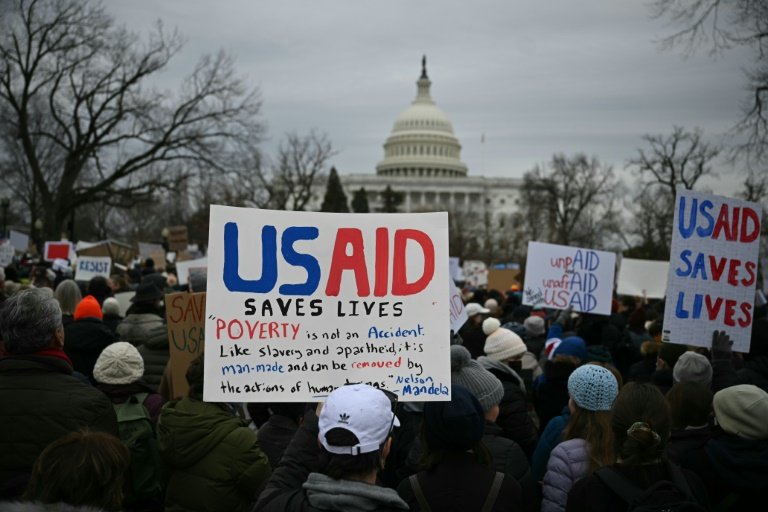

The recent decision by Donald Trump’s administration to freeze funding for aid programs has left humanitarian organizations struggling to cope with sudden budget cuts, putting millions of lives in jeopardy as critical programs grind to a halt.
Just four days after Trump returned to office, NGOs working with the US Agency for International Development (USAID) were ordered to suspend all projects financed by the agency. A week later, another directive allowed certain “life-saving humanitarian assistance” programs to resume, but the vague wording has left many organizations uncertain about what can continue.
The administration has been vocal in its criticism of USAID, with Trump calling it a “radical” institution and his advisor, billionaire Elon Musk, referring to it as a “criminal organization.” Secretary of State Marco Rubio, now acting director of USAID, has pledged to crack down on what he calls its “insubordination.”
Immediate Consequences for NGOs
Humanitarian groups have already felt the impact. Kevin Goldberg, head of the French aid organization Solidarités International, reported that projects in Mozambique, Syria, and Yemen had been halted. He criticized the abrupt freeze, calling it reckless given the millions of lives at stake.
Daryl Grisgraber from Oxfam America warned that the freeze could have “life or death consequences” and sees the move as a political maneuver rather than a necessary policy shift. He emphasized that aid programs may face severe funding cuts once the 90-day review period ends, further deepening the crisis.
In the Philippines, the Balay Rehabilitation Center, which provides psychological support to survivors of violence, has already suspended services for about 20 individuals. Executive Director Josephine Lascano expressed uncertainty about the program’s future, noting that the country received nearly $190 million in USAID funding last year.
Wider Global Implications
Beth Schlachter from MSI Reproductive Choices, which provides sexual and reproductive healthcare services, said nearly 10% of their budget comes from USAID, and they are bracing for a significant funding loss. She highlighted the growing anxiety among field workers, who are unsure which programs will survive.
Tom Hart, CEO of InterAction, an alliance of humanitarian organizations, warned that the freeze contradicts the administration’s own foreign policy goals. “Children are being denied education, and expectant mothers are going without essential prenatal care,” he said.
As NGOs struggle to navigate the uncertainty, many fear that the decision to abruptly cut aid could not only harm millions in need but also diminish US influence in global humanitarian efforts.
