

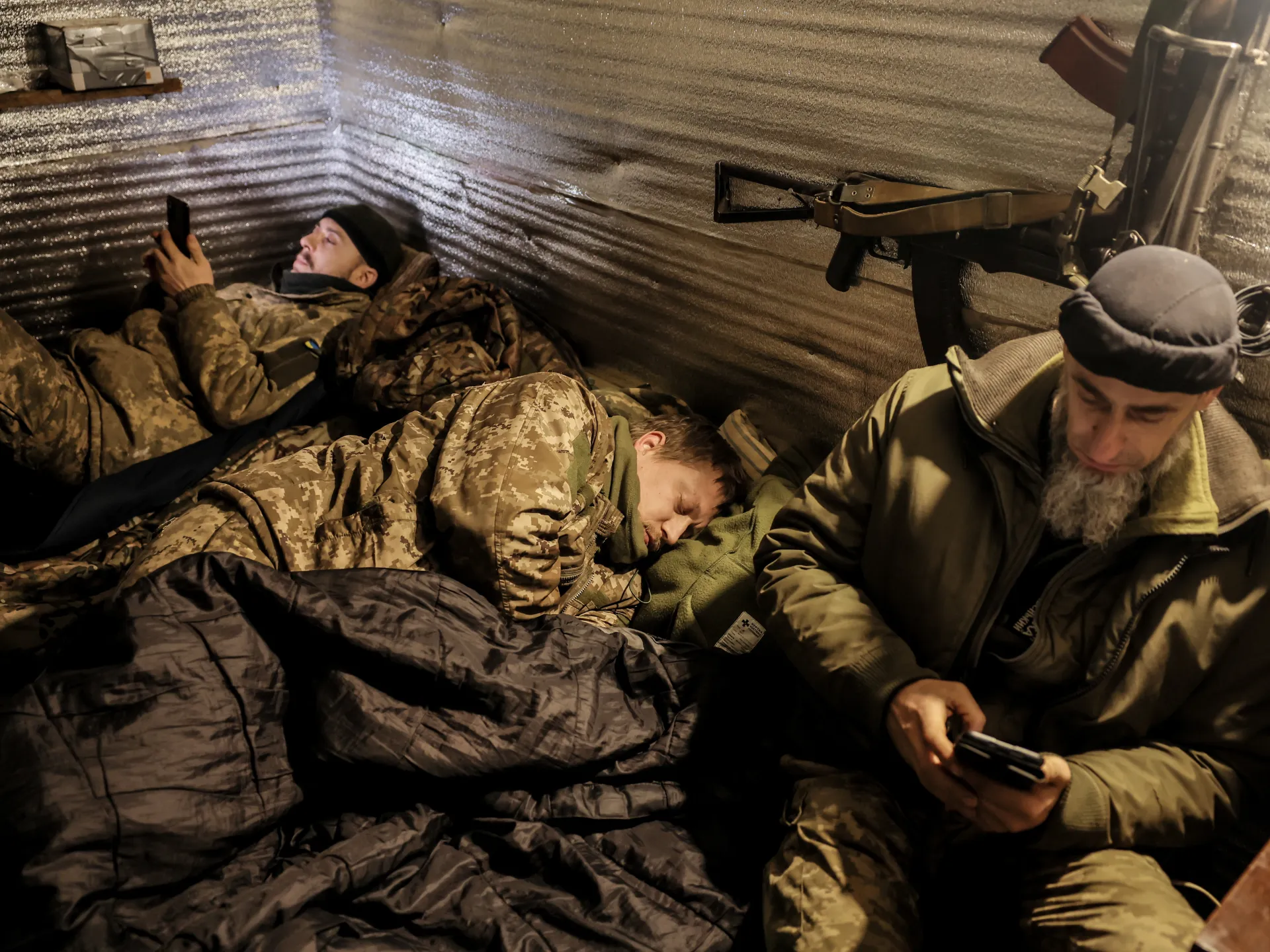

North Korean soldiers deployed to assist Russian forces in Ukraine have reportedly disappeared from the battlefield, according to South Korea’s National Intelligence Service (NIS). The agency revealed that since mid-January, there has been no evidence of North Korean troops engaged in combat in the Russian Kursk region.
In December, approximately 11,000 North Koreans were sent to Kursk to support Russia’s efforts against Ukraine’s counteroffensive launched in August. Recent reports from the NIS corroborated an earlier story by The New York Times, which attributed the North Koreans’ absence to heavy casualties. Ukrainian President Volodymyr Zelenskyy mentioned that as many as 4,000 North Korean soldiers had been killed or injured, accounting for nearly a third of their forces. The NIS put the number closer to 3,000.
Ukrainian commanders on the frontlines reported that Russian forces used North Koreans as shock troops in attacks. They were allegedly instructed to commit suicide rather than risk capture or were shot by their own comrades. However, independent verification of these claims remains unavailable.
The North Korean absence could be temporary, with speculation that reinforcements are en route. Zelenskyy confirmed information that up to 25,000 additional North Korean troops might be headed to the Kursk area.
In the meantime, Russian forces have also suffered significant losses. Ukraine’s Ministry of Defence estimated that Russian casualties reached 48,240 last month, marking the second-highest monthly toll in nearly three years of conflict. A large portion of these losses occurred in Pokrovsk, a town in Donetsk that Russia has been intensively trying to capture. Ukrainian commander-in-chief Oleksandr Syrskii revealed that over 15,000 Russian troops had been neutralized in January alone, with about 7,000 killed.
Despite these heavy casualties, Russia’s territorial gains have been limited. The Institute for the Study of War reported that Russia only seized 498 square kilometers (192 square miles) of land in January, a decrease compared to December’s 593 square kilometers (229 square miles). This trend indicates that while Russian forces continue to suffer substantial losses, their territorial progress has slowed.
Ukraine faces its own challenges, including manpower shortages. Reports indicate that Ukraine has paused efforts to create 12 new brigades, instead using reserves to replenish losses in existing units. Ukraine’s Ministry of Defence has confirmed a loss of 45,100 soldiers, and preparations are underway to add 50,000 reservists to frontline brigades.
Both sides have engaged in brutal aerial bombardments, with Russia launching extensive missile and drone strikes across Ukraine. In one of the deadliest attacks, a missile strike in Poltava killed 14 people and injured 22.
Amid these challenges, Ukraine continues to target Russian military infrastructure, including key refineries and air defence systems. Ukrainian drones recently struck a major Lukoil refinery in Volgograd, causing significant damage.
Internationally, Ukraine has received continued military support from European nations, including Sweden and Finland, while the United States’ position on military aid has become more conditional under President Donald Trump, who has requested Ukrainian rare earth minerals in exchange for continued assistance.
The war continues with no clear end in sight, as both Russia and Ukraine endure immense losses on the battlefield.
