


Islamophobia
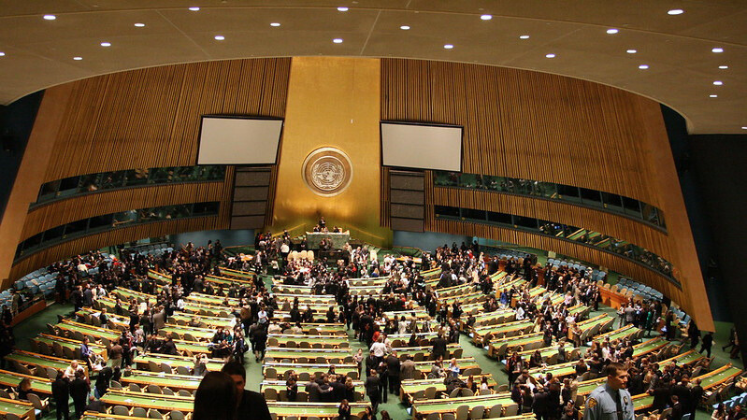
UNITED NATIONS: Pakistan, representing the Organisation of Islamic Cooperation (OIC), urged the global community to take decisive action against the alarming rise in Islamophobia and other forms of anti-Muslim hatred and bigotry. The call was made during a session of the United Nations General Assembly (UNGA) held to observe the International Day to Combat Islamophobia on March 15.
Addressing the 193-member assembly, Pakistan’s Permanent Representative to the UN, Ambassador Munir Akram, emphasized the need for unity and empathy in the fight against Islamophobia. He highlighted that the objective should be to leverage the positive messages of peace, justice, tolerance, and compassion that Islam — and all religions — promote to counter hatred and intolerance.
The International Day to Combat Islamophobia was officially designated by the UNGA in 2022 through a resolution co-sponsored by Pakistan. Ambassador Akram described this achievement as a “defining moment” in recognizing the global threat posed by Islamophobia. The event coincided with the holy month of Ramadan, further underscoring the significance of protecting Muslim rights and dignity.
Ambassador Akram pointed out that Islamophobia is not confined to a specific region but is spreading across both the East and the West. He noted that in some countries, Muslims face systematic marginalization and suppression, with Islamophobia being exploited for political gains, fueling fear, prejudice, and hatred.
He urged governments to ensure that their policies and laws reflect a firm commitment to religious tolerance and to prevent the use of media and disinformation to incite hatred.
Additionally, he called for an end to discriminatory laws targeting Muslim identity and practices, such as hijab bans, and the relegation of Muslims to second-class status in certain societies.
“No nation can claim to be a true democracy while it systematically alienates and marginalizes its Muslim citizens,” Akram asserted.
The Pakistani envoy also highlighted the severe consequences of religious intolerance throughout history, including mass expulsions, pogroms, and genocide.
He warned that the current wave of Islamophobia is following a similar dangerous trajectory. He cited the Christchurch mosque massacre in New Zealand in 2019 as a horrific example of Islamophobic violence and hatred.
Ambassador Akram welcomed the UN Secretary-General Antonio Guterres’ decision to appoint Spanish diplomat Miguel Moratinos as the Special Envoy on Islamophobia. He urged the UN to allocate the necessary financial resources to enable the special envoy to implement the provisions of the UNGA resolution on combating Islamophobia.
The Pakistani envoy proposed a comprehensive action plan to address Islamophobia, which would include defining Islamophobia and its manifestations, establishing a mechanism to monitor and document acts of Islamophobia, developing national legislation to criminalize such acts, and creating accountability mechanisms. Additionally, the plan would involve media and educational programs to promote tolerance and harmony.
Ambassador Akram praised the efforts of countries like Sweden and Denmark, which have enacted laws criminalizing the desecration of the Holy Quran and other acts of Islamophobia. He also acknowledged Canada’s appointment of a special representative to combat Islamophobia and the U.S.’s launch of a national strategy against anti-Muslim hate.
Australia’s appointment of a special envoy for interfaith dialogue was also commended. He encouraged other nations to follow these examples in addressing the growing threat of anti-Muslim hatred.
In conclusion, Ambassador Akram reaffirmed Pakistan and the OIC’s commitment to working with the UN Secretary-General and his special envoy to implement a concrete and effective action plan to combat Islamophobia.
