

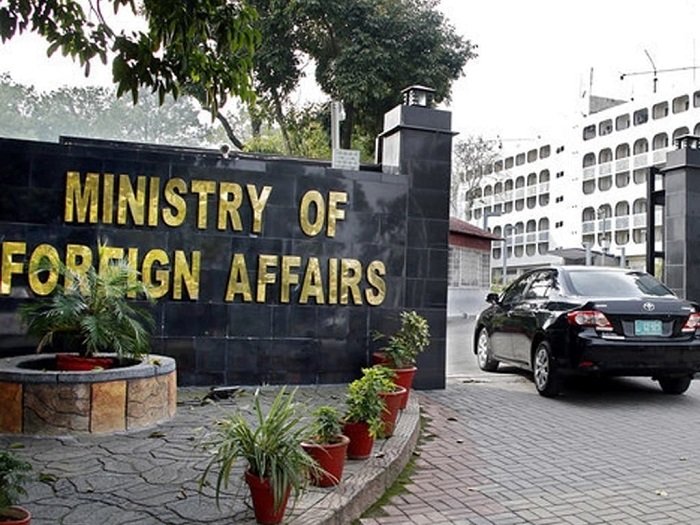

On Tuesday, Pakistan strongly rejected what it called “provocative and inflammatory statements” made by Indian Prime Minister Narendra Modi, warning that such remarks could further destabilize an already fragile regional situation and represent a “dangerous escalation.”
In a statement issued by the Foreign Office Spokesperson, Shafqat Ali Khan, Islamabad condemned Modi’s recent address, calling it “based on misinformation, political opportunism, and a blatant disregard for international law.” The spokesperson emphasized that at a time when global efforts are underway to restore peace and stability in the region, such statements only serve to derail progress. Pakistan specifically dismissed India’s portrayal of Pakistan as being in “despair and frustration” over seeking a ceasefire as “blatant lies.”
According to the Foreign Office, the ceasefire agreement along the Line of Control (LoC) came about through diplomatic channels, aided by friendly countries pushing for de-escalation. Pakistan reiterated its commitment to the ceasefire and ongoing efforts towards regional stability.
The Foreign Office also dismissed India’s exploitation of the recent attack in Pahalgam as a “pretext” to malign Pakistan. No credible evidence was found linking Pakistan to the incident. The spokesperson warned that India was attempting to create a false narrative of external threats to justify military action and achieve domestic political goals.
Pakistan condemned India’s actions, including the “reckless targeting” of Pakistan’s military installations under false pretenses. The statement highlighted that despite Pakistan’s restraint, India’s escalation posed a threat of spiraling conflict.
Calling India a “revisionist actor,” the Foreign Office cautioned that such actions risked undermining strategic stability in South Asia and dragging the region closer to disaster. It also rejected India’s justification for the “cold-blooded murder” of civilians, particularly women and children, under its so-called “new normal.”
The Foreign Office reaffirmed Pakistan’s military response to Indian aggression was “calibrated, precise, and limited to military targets,” asserting the country’s defensive strength. The statement also criticized India’s disregard for international agreements, including violations of the Indus Waters Treaty, and vowed to protect Pakistan’s rights under the Treaty.
Further, Pakistan highlighted its own fight against terrorism, stating that it has been a victim of “Indian-sponsored terrorism.” Pakistan reaffirmed its commitment to a peaceful resolution of the Jammu and Kashmir dispute in line with United Nations Security Council resolutions and the aspirations of the Kashmiri people.
The Foreign Office also reiterated Pakistan’s support for former US President Donald Trump’s efforts to resolve the Kashmir issue, which it described as a “source of regional instability.”
Concluding, the Foreign Office emphasized that “peace is the true strength in this era” and warned that Pakistan’s commitment to peace should not be mistaken for weakness. Any future aggression, it stated, would be met with full resolve. Pakistan urged India to abandon politically motivated rhetoric and work towards the stability and prosperity of the region.
