



Pakistan
The menace of terrorism continues to cast a dark shadow over Pakistan, making it the world’s second-most terrorism-affected country in 2024, according to the latest Global Terrorism Index (GTI) 2025 report. The alarming ranking marks a sharp deterioration in Pakistan’s security situation, as the country has moved up from the fourth position in the previous year.
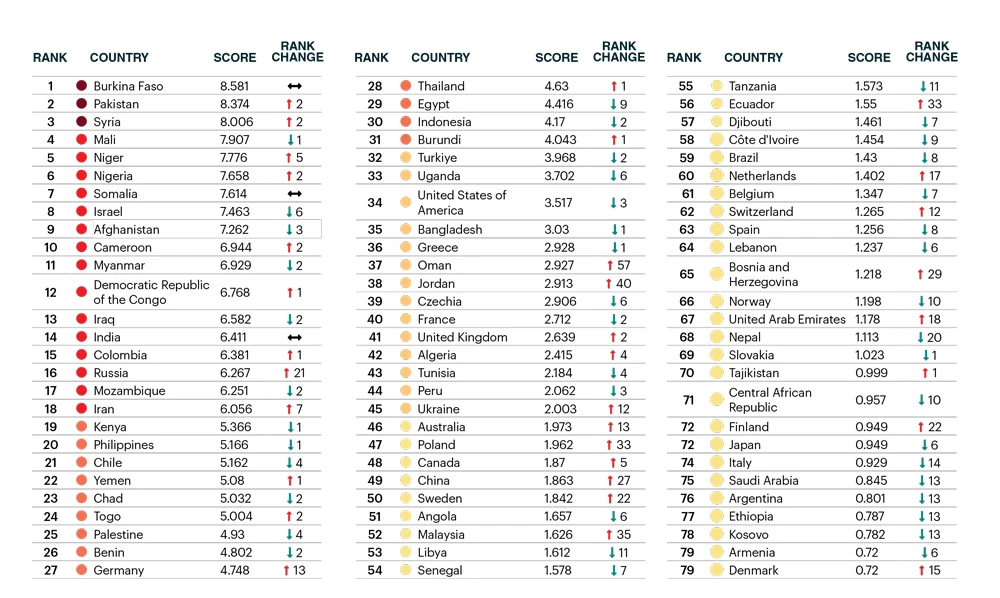
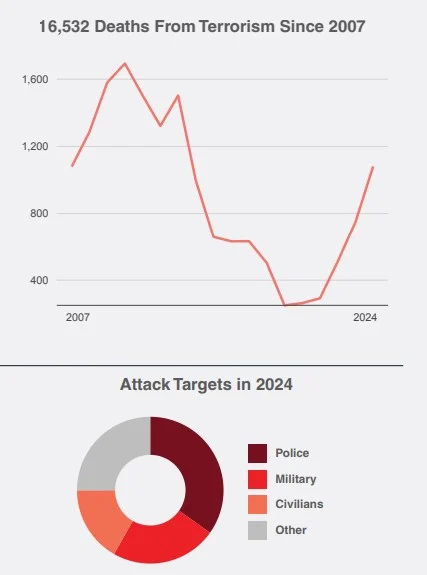
The report highlights a staggering 45% increase in terrorism-related deaths, with the number rising from 748 in 2023 to 1,081 in 2024—one of the steepest surges worldwide. Similarly, terror attacks more than doubled, skyrocketing from 517 in 2023 to 1,099 in 2024. Notably, this is the first time since the inception of the GTI that Pakistan has recorded over 1,000 terrorist attacks in a single year.
The troubling statistics were released a day after Pakistani security forces successfully repelled a terrorist attack on Bannu Cantonment in Khyber Pakhtunkhwa. The offensive left 16 militants dead, but it also resulted in the martyrdom of five soldiers and 13 civilians, as confirmed by the Inter-Services Public Relations (ISPR).
TTP: The Deadliest Terror Group in Pakistan
The GTI report aligns with Pakistan’s long-standing concerns regarding the use of Afghan soil by terrorist groups, particularly the banned Tehreek-e-Taliban Pakistan (TTP). The report notes a significant correlation between the sharp increase in terrorist activity in Pakistan and the rise of the Afghan Taliban to power in Kabul.
The TTP remains the most lethal terrorist organization operating in the country, accounting for 52% of all terrorism-related deaths. The group executed 482 attacks in 2024, leading to 558 fatalities. The previous year saw a doubling of TTP-led attacks and a staggering 90% rise in casualties.
The report further underscores that since the Taliban’s return to power in Afghanistan in 2021, the TTP has exploited increased operational freedom and access to safe havens across the border. This has allowed the group to conduct attacks with greater ease and impunity, making 2024 the deadliest year for TTP-led attacks on record. The number of fatalities caused by the group reached its highest level since 2011.
Balochistan and Khyber Pakhtunkhwa: The Worst-Hit Provinces
Balochistan and Khyber Pakhtunkhwa remain the most severely affected provinces in Pakistan, accounting for over 96% of all terrorist attacks and deaths in 2024. Their shared border with Afghanistan has made them particularly vulnerable to cross-border militancy and insurgent activities.
Additionally, the GTI 2025 report highlights the role of the banned Balochistan Liberation Army (BLA) in escalating violence. The BLA was responsible for the deadliest terror attack of 2024, in which a suicide bomber targeted Quetta railway station, killing at least 25 civilians and soldiers. The group’s attacks surged dramatically from 116 in 2023 to 504 in 2024, while the death toll from BLA-led assaults rose fourfold, jumping from 88 in 2023 to 388 in 2024.
Government’s Counter-Terrorism Response
In response to the growing threat, the Pakistani government has intensified counter-terrorism operations. The GTI 2025 report highlights Operation Azm-e-Istehkam, a large-scale military campaign launched by Prime Minister Shehbaz Sharif in June 2024.
The operation aims to dismantle militant networks through airstrikes and targeted raids, focusing on eliminating key terrorist leaders. As part of these measures, Pakistan carried out airstrikes in Afghanistan’s Paktika province, specifically targeting TTP camps. These actions signal Islamabad’s commitment to eradicating terrorism and securing its borders.
Despite these efforts, the GTI report underscores the escalating security crisis in Pakistan, urging stronger counter-terrorism measures and enhanced regional cooperation to curb militant activities. As the country battles an ever-growing terrorist threat, the need for decisive action and long-term stability remains more crucial than ever.
