


Black Sea Ceasefire
ISLAMABAD: Pakistan has welcomed the recently brokered limited ceasefire agreement between Russia and Ukraine, which prohibits attacks on energy infrastructure and ensures the safe passage of vessels in the Black Sea. The agreement, hailed as a significant diplomatic breakthrough, is seen as an initial step toward broader peace efforts.
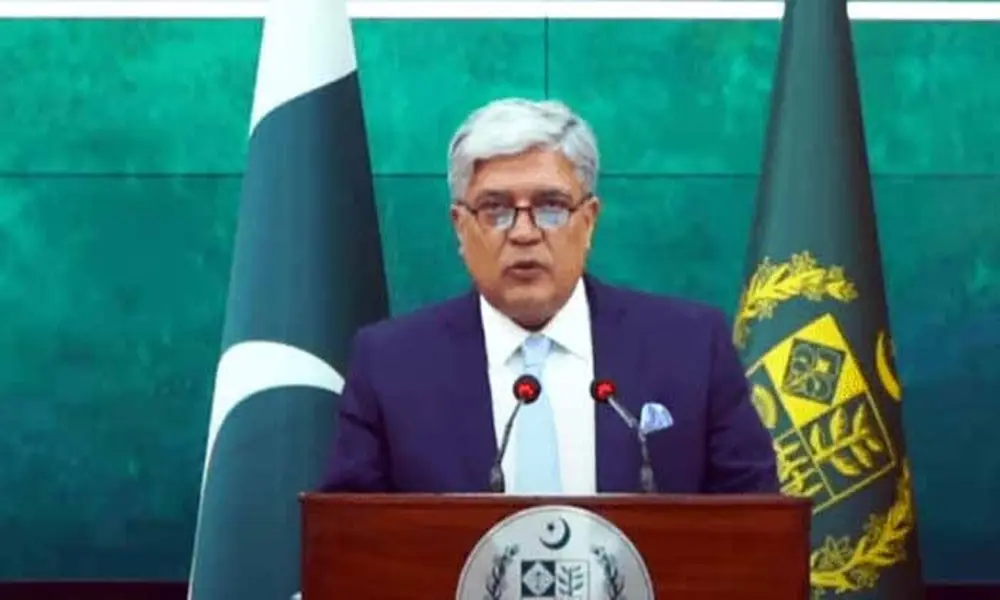
During his weekly press briefing, Foreign Office spokesperson Shafqat Ali Khan expressed appreciation for the role played by the United States in facilitating the agreement. He stated that Pakistan remains hopeful that this initial ceasefire could lead to a more comprehensive and lasting peace between the two nations.
“Pakistan’s stance on the Ukraine conflict has remained consistent. As a country that shares friendly ties with both Russia and Ukraine, we have continuously advocated for dialogue, diplomacy, an immediate cessation of hostilities, and a peaceful resolution to this crisis,” Khan reiterated.
Beyond the Russia-Ukraine conflict, the spokesperson also condemned Israel’s repeated airstrikes and incursions into Syrian territory. He emphasized that such actions were clear violations of the 1974 Disengagement of Forces Agreement and posed a serious threat to international law and regional stability.
He asserted that sustainable peace in Syria could only be achieved through a credible political transition, national unity, reconciliation, and inclusive governance.
Turning to the situation in Indian Illegally Occupied Jammu and Kashmir (IIOJK), Khan expressed grave concerns over the recent raids conducted by Indian authorities on the residences of members of the All Parties Hurriyat Conference.
He described these actions as an attempt to crush dissent and intimidate the local population. Pakistan, he said, urges India to halt such oppressive measures and respect the fundamental rights of the Kashmiri people, including their right to self-determination.
Addressing concerns raised by UN experts regarding the detention of Baloch protestors, the spokesperson criticized what he described as an imbalanced and disproportionate approach.
He argued that while the UN experts had focused on protestors’ grievances, they had overlooked the broader security situation, including the role of extremist elements in inciting violence and disrupting public order.
Khan accused these elements of collaborating with terrorists and facilitating attacks against the state. As evidence, he cited their forced entry into the District Hospital in Quetta, where they seized the bodies of five militants killed in the Jaffar Express hostage rescue operation. He noted that law enforcement had since retrieved three of these bodies from the protestors.
“The pattern of selective and disproportionate focus by certain international bodies serves no constructive purpose. Instead, it emboldens extremist groups, fuels media sensationalism, incites disorder, and worsens societal polarization,” Khan asserted.
The spokesperson also briefed the media on the recent visit of Pakistan’s Special Representative for Afghanistan, Ambassador Mohammad Sadiq, to Kabul.
During discussions with Afghanistan’s Acting Foreign Minister, Amir Khan Muttaqi, both sides addressed mutual concerns, including security, trade, economic cooperation, and people-to-people exchanges.
Both Pakistan and Afghanistan reaffirmed their commitment to fostering a cooperative bilateral relationship aimed at achieving long-term regional peace and stability. The two nations also agreed to enhance high-level engagement and diplomatic dialogue to further strengthen ties.
