

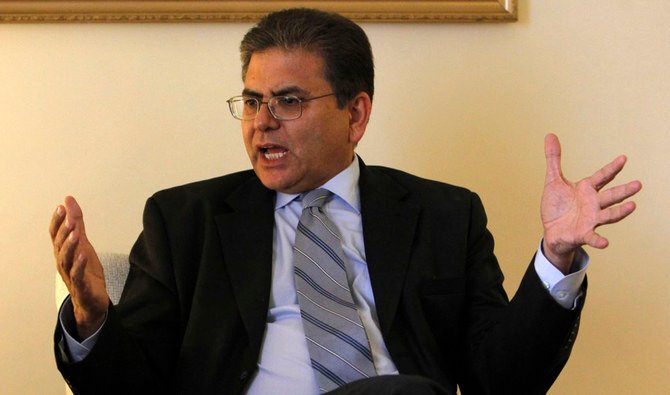

Pakistan’s special envoy for Afghanistan, Ambassador Muhammad Sadiq Khan, issued a strong warning on Monday, stating that all agreements with Afghanistan could be suspended if the Taliban government fails to address Islamabad’s mounting concerns over cross-border terrorism.
Speaking at a seminar hosted by the Islamabad Policy Research Institute (IPRI), Sadiq emphasized that Pakistan cannot tolerate attacks by armed groups based in Afghanistan, particularly the Tehreek-i-Taliban Pakistan (TTP).
“TTP is a major threat. It’s unacceptable that our youth are being killed daily. This has become a tragic routine in some areas,” he said. “Ignoring this would be criminal. Afghanistan must cooperate. If not, all agreements will be nullified and no further progress will be possible.”
His remarks come two weeks after his meetings with Taliban ministers and officials, during which he raised the issue of TTP and other groups responsible for violence inside Pakistan. Sadiq had also visited Kabul in December, shortly after being reappointed as special envoy.
“Pakistan could offer immense support to Afghanistan — but only if terrorism from across the border stops,” he added. “We acknowledge that there are internal challenges as well, but the inflow from Afghanistan must also be addressed.”
Since the Taliban’s return to power in August 2021, Pakistan has repeatedly urged Kabul to take action against TTP and prevent cross-border movements. In 2022, the Taliban government hosted peace talks between Pakistan and TTP in Kabul, but the process collapsed and negotiations were subsequently abandoned.
“The answer doesn’t lie only in arrests or killings,” Sadiq said. “It lies in containing and restraining these groups. There should be no objection to that.”
The Taliban authorities have not responded to these latest statements and have consistently rejected claims that TTP operates from Afghan territory.
At the same event, Khyber Pakhtunkhwa Governor Faisal Karim Kundi highlighted multiple challenges facing the province, including terrorism, corruption, poverty, smuggling, drug trafficking, and political instability.
“Our security forces have made great sacrifices, but these problems still persist,” Kundi noted. “To resolve them, a robust civil-military cooperation is essential, alongside accountable and efficient governance.”
He also stressed the importance of empowering local governments and ensuring financial systems are managed by professionals.
Former KP Chief Minister Amir Haider Khan Hoti called for national unity against militancy. “Fighting terrorism must be a non-partisan issue. A collective national response is necessary.”
Former senator Sitara Ayaz remarked that after more than two decades of conflict, the region is still grappling with violence. “We failed to fully understand the cultural and historical context of FATA and KP during the merger process,” she said.
Retired Lt Gen Hasan Azhar Hayat pointed out the growing disconnect between the state and people in KP. “The public is weary of military operations, and they reject both extremism and external control. Development and youth empowerment must be prioritized. Policy must be shaped with input from local communities,” he emphasized.
In his opening remarks, IPRI President Dr Raza Muhammad observed that terrorism remains a persistent issue despite years of efforts. He highlighted Pakistan’s strategic location and abundant natural resources, but cautioned that internal instability enables external forces to exploit the situation. “Local grievances must not be overlooked,” he warned.
