

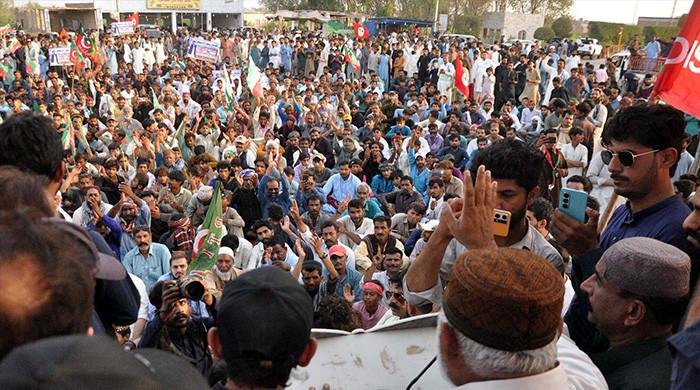

Protests by lawyers and civil society groups against the proposed construction of six canals from the Indus River have reached their 10th consecutive day, bringing traffic between Sindh and Punjab on the National Highway to a complete standstill.
The sit-in, which continues to attract significant participation from lawyers, nationalist groups, and political activists, has halted the movement of goods and commuters for over a week. The blockade has severely disrupted the supply of essential items, including petrol and food, as hundreds of trucks and trailers remain stranded on the highway.
Drivers stranded at the protest sites have voiced concerns over the worsening condition of their vehicles, particularly tire damage caused by the prolonged halt.
Despite Prime Minister Shehbaz Sharif’s assurances that no canal construction would proceed without consensus, the demonstrators have vowed to continue their protest until an official notification cancelling the project is issued.
Earlier this week, Prime Minister Shehbaz and Pakistan Peoples Party (PPP) Chairman Bilawal Bhutto-Zardari held crucial talks in Islamabad following growing unrest across Sindh. In a joint press conference, the prime minister confirmed that no canals would be developed unless the Council of Common Interests (CCI) reached a unanimous decision. He announced that the next CCI meeting, scheduled for May 2, would formalize this agreement.
Protests are ongoing at several points along the National Highway. In Daharki, near the Mangrio Pump, activists have maintained an uninterrupted sit-in for eight days.
Meanwhile, a separate protest by lawyers at the Sindh-Punjab border near Kamoon Shaheed has entered its fifth day, worsening the already dire traffic situation.
Protesters remain steadfast in their demands, citing concerns over the environmental and social impact of the proposed canal projects. So far, no resolution has been reached, and the transport blockade shows no immediate signs of ending.
