

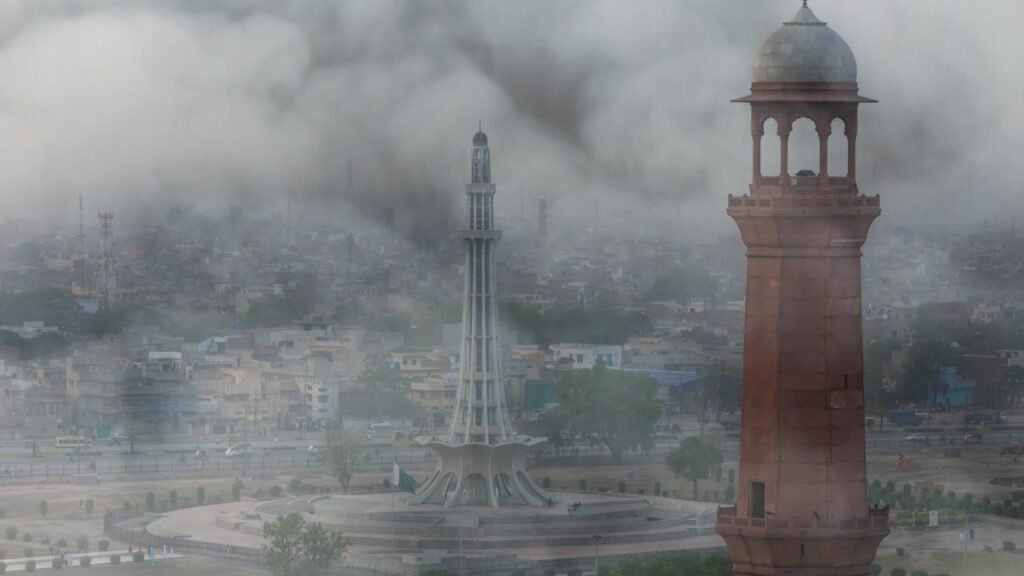

LAHORE: In response to a severe rise in smog levels, the Punjab government has imposed extensive restrictions across four divisions, closing public parks, zoos, museums, historical sites, playlands, and sports venues in Lahore, Gujranwala, Multan, and Faisalabad until November 17.
These closures are part of emergency measures to combat the hazardous air quality affecting the region, as outlined in a notification from the Directorate General of Environment. Violators of these restrictions may face fines and possible arrest under environmental protection laws, according to the notification. The environment department noted that these actions align with Punjab’s ongoing anti-smog efforts.
Punjab Senior Minister Marriyum Aurangzeb has urged residents, especially parents, to stay indoors and prevent children from going outside. “Having schools closed doesn’t mean it’s time for outings,” she cautioned, encouraging people to follow precautionary measures to protect public health.
In addition to these closures, authorities have intensified enforcement against pollution sources. In Lahore alone, 47 smoke-emitting vehicles were seized, and 31 others fined, totaling Rs550,000 in penalties. Inspections have extended to private institutions, leading to the sealing of several food stalls and commercial outlets for violating environmental standards.
Water-spraying operations are also underway across Lahore to reduce airborne pollutants. The public is urged to wear masks and limit outdoor activities until air quality improves.
Smog Expected to Worsen Next Week
According to recent data, pollution levels have reached alarming highs in Pakistan, with seven cities ranking among the worst for air quality. Multan recorded the highest Air Quality Index (AQI) of 2,135, followed by Lahore at 676. Other cities, including Peshawar, Islamabad, Haripur, Rawalpindi, and Karachi, are also facing critical pollution levels.
Meteorologists predict worsening smog conditions in the coming week, with light wind speeds of 11 km/h in Lahore and 7 km/h in Multan, potentially slowing pollutant dispersal.
