

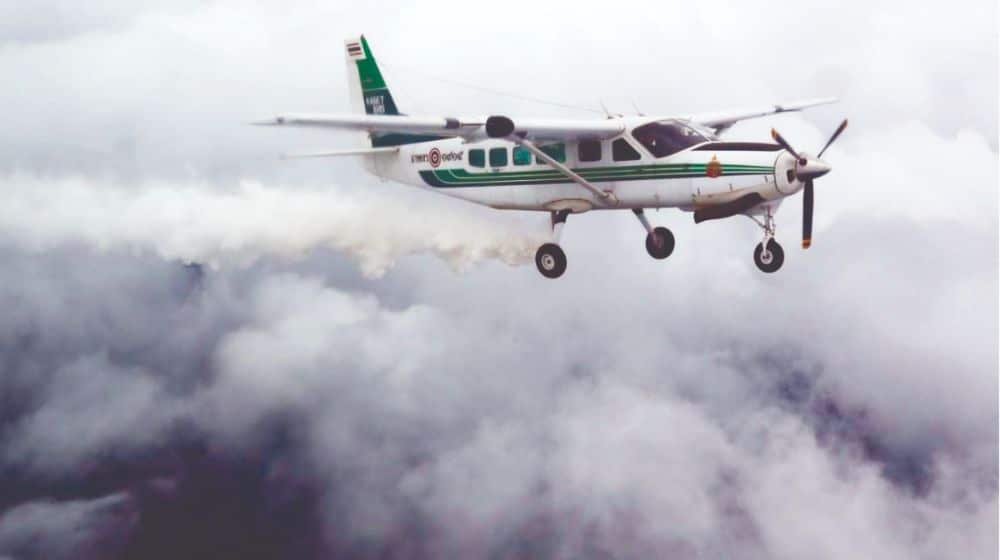

The Punjab government has successfully conducted an artificial rain experiment using indigenous technology to address the region’s severe smog crisis. This cloud-seeding operation targeted Jhelum, Gujar Khan, Chakwal, and Talagang, resulting in timely rainfall in Jhelum and Gujar Khan.
The initiative was a collaborative effort involving the Punjab government, the Pakistan Army’s Scientific Research and Development division, Army Aviation, PARCO, and the Environmental Protection Agency. Their joint expertise and advanced technology enabled the successful trial.
The artificial rain project aims to counteract the heavy smog that has severely reduced visibility in cities like Lahore and Multan, heightened respiratory health risks, and led to school closures and other restrictions.
Lahore, a city of 14 million residents surrounded by industrial hubs, consistently ranks among the most polluted cities globally. This month, it recorded unprecedented pollution levels.
Chief Minister Maryam Nawaz Sharif commended the scientific community and partner organizations for this milestone, emphasizing its potential to drive future technological progress and mitigate climate-related challenges.
In response to hazardous air conditions, Punjab has declared a health emergency, enforcing a ban on construction activities, extending school closures, and moving universities to online education.
Residents have also turned to spiritual practices, offering “Namaz-e-Istisqa,” a special prayer for rain, to seek relief from the toxic smog.
The worsening air quality is attributed to insufficient rainfall in prior months. The government is implementing additional measures, including shutting down construction sites and industrial operations in Lahore and Multan. A three-day lockdown is being considered if the situation remains critical.
