

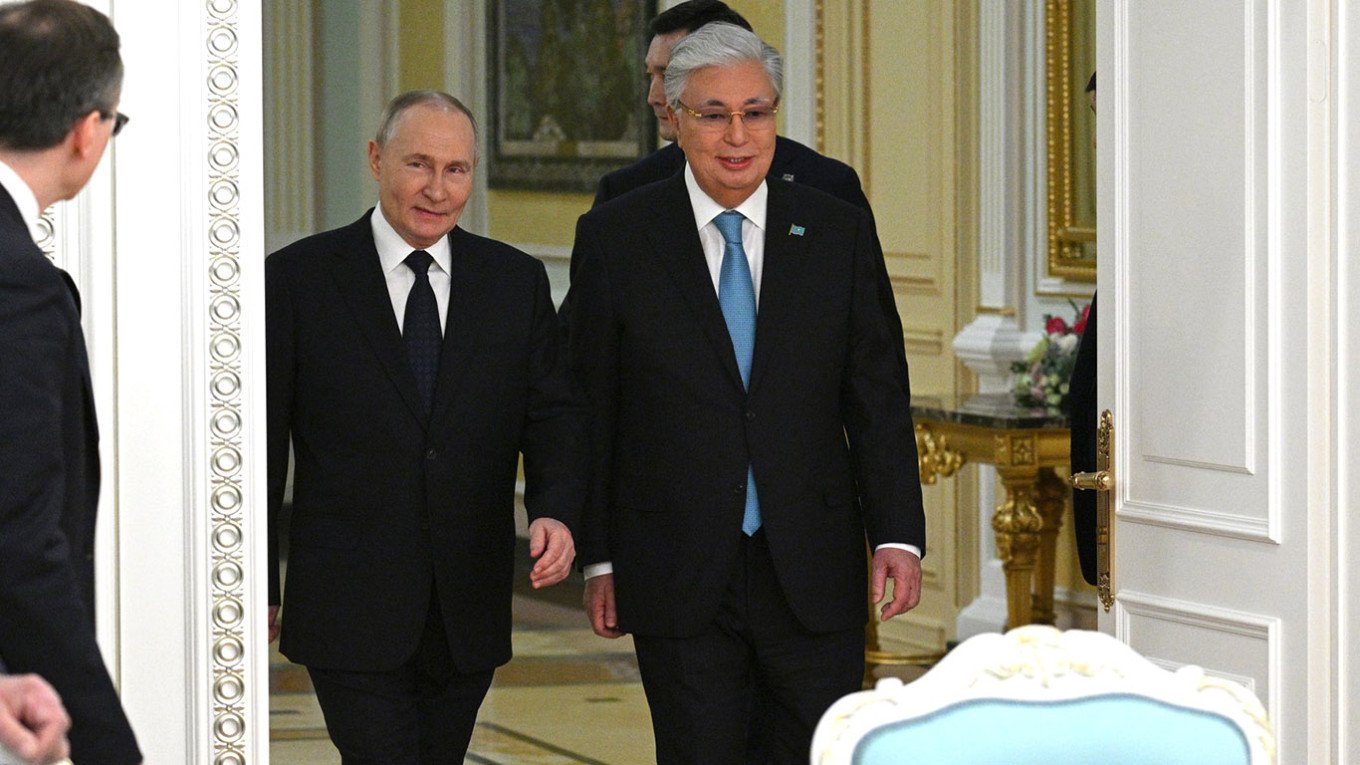

Russian President Vladimir Putin arrived in Kazakhstan on Wednesday for a two-day visit aimed at bolstering ties with Central Asian nations amid ongoing tensions over the war in Ukraine.
Although Kazakhstan is a member of the Moscow-led Collective Security Treaty Organization (CSTO), President Kassym-Jomart Tokayev has expressed reservations about Russia’s invasion of Ukraine, refraining from publicly endorsing the Kremlin’s actions.
Ahead of Putin’s visit, Tokayev penned an article for the pro-Kremlin Izvestia newspaper, advocating for “peaceful dialogue” without directly referencing Ukraine. In a parallel gesture, Putin highlighted the “shared cultural, spiritual, and moral values” between the two countries in an op-ed for a Kazakh state-run newspaper, pledging to deepen their “friendly and allied relations.”
Russian state media showcased footage of Putin’s arrival in Astana, Kazakhstan’s capital, where discussions on trade and energy cooperation are expected to dominate the agenda.
Strains in Bilateral Relations
Recent tensions between the two countries have surfaced, with Moscow imposing restrictions on certain Kazakh agricultural exports and Kazakhstan declining to join the BRICS economic bloc in September. The expansion of BRICS has been a cornerstone of Russia’s foreign policy, with Putin presenting the bloc as a counterbalance to Western influence.
Ukraine is anticipated to be a focal point during Thursday’s CSTO summit, where Putin will meet with other member states to discuss regional security issues. According to Russian state agency TASS, the discussions will address Ukraine’s use of Western-supplied long-range missiles to target Russian territory.
Armenia’s Absence from CSTO
Armenia’s suspension of its CSTO membership over dissatisfaction with Moscow’s lack of support during its recent conflict with Azerbaijan will also loom over the summit. However, Kremlin aide Yuri Ushakov stated that Armenia remains a “fully-fledged member” and can rejoin at any time.
Economic and Energy Cooperation
Putin and Tokayev are set to explore new avenues of economic and energy collaboration, including the potential construction of Kazakhstan’s first nuclear power plant. Russia’s state-owned Rosatom is seen as a leading candidate for the project. Despite being the world’s top uranium producer—accounting for 43% of global production—Kazakhstan currently lacks operational nuclear reactors. Putin emphasized Rosatom’s readiness for “large-scale projects” with Kazakhstan.
Agreements and Strategic Importance
The visit is expected to conclude with the signing of several bilateral agreements, followed by a joint media briefing from both leaders. Putin’s trip underscores Central Asia’s strategic importance to Moscow, as the region remains one of the few areas where the Russian president maintains regular diplomatic outreach since the escalation of the Ukraine conflict.
