

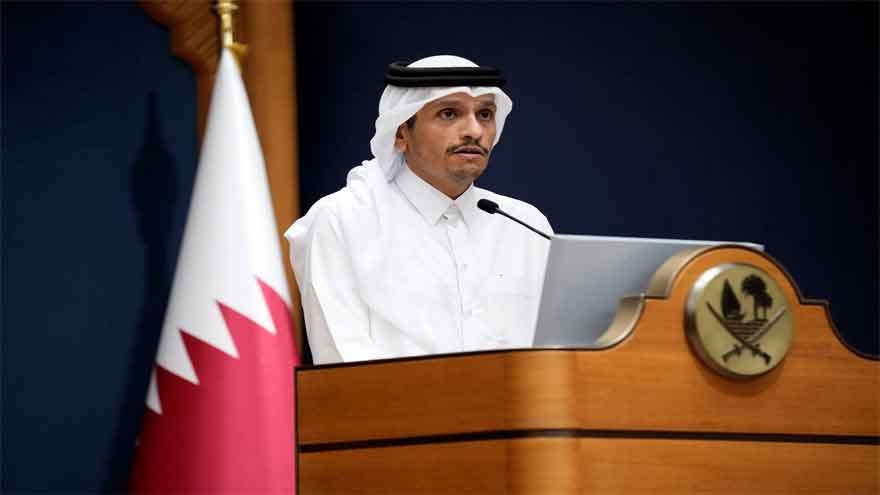

Qatar’s Prime Minister Sheikh Mohammed bin Abdulrahman Al Thani announced on Tuesday that his country successfully mediated a ceasefire between Iran and Israel, acting upon a formal request from the United States to serve as a diplomatic liaison.
Speaking at a press conference in Doha alongside Lebanon’s Prime Minister Nawaf Salam, Al Thani acknowledged that Qatar’s relationship with Iran had been strained by a recent missile attack targeting a U.S. military base located within Qatari territory. However, he expressed hope that bilateral ties would eventually normalize.
On Monday, Iran launched missile strikes at Al Udeid Air Base in retaliation for U.S. involvement in Israeli airstrikes on Iranian nuclear sites. Tehran reportedly issued a warning before the attack, and no casualties were reported. Hours later, Washington announced a ceasefire had been brokered.
Al Thani called the attack on Qatar “unacceptable,” especially given Doha’s ongoing diplomatic efforts to de-escalate regional tensions. “Such actions leave scars on our bilateral ties,” he said. “But we will respond through diplomatic and legal channels.”
He reaffirmed the strength of U.S.-Qatar relations, noting, “The partnership between Qatar and the U.S. continues to grow stronger. We hope our relations with Iran will return to normal soon.”
Al Thani emphasized that the ceasefire was facilitated through direct coordination between Qatar and Iranian authorities, prompted by a request from Washington. “We hope the ceasefire will endure and encourage both Iran and the United States to return to the negotiating table for a comprehensive diplomatic resolution,” he stated, highlighting Qatar’s long-standing role as a regional mediator.
He also disclosed that Iranian President Masoud Pezeshkian had expressed regret during a call with Qatar’s Emir Sheikh Tamim bin Hamad Al Thani, stating that the strike on Qatari soil was unintended and solely aimed at retaliating against U.S. airstrikes.
Al Thani further urged a resumption of Oman-mediated negotiations on Iran’s nuclear program, which were suspended following Israel’s offensive against Iranian facilities.
In addition to his role in the Iran-Israel conflict, the Qatari premier said that Doha was continuing its efforts to broker a renewed ceasefire in the Gaza conflict. “We are still engaged in indirect negotiations between the parties,” he said. “We hope Israel does not exploit the ceasefire with Iran to intensify its operations in Gaza.”
Additional Insight from Diplomatic Sources:
A source with knowledge of the negotiations confirmed that it was Prime Minister Al Thani who personally convinced Iranian officials to agree to the U.S.-backed ceasefire. The source, speaking on condition of anonymity due to the sensitivity of the matter, revealed that following Monday’s missile attack on Al Udeid Air Base, U.S. President Donald Trump contacted Qatar’s Emir and informed him that Israel had approved the ceasefire terms proposed by Washington.
Trump then requested that Qatar use its influence to bring Iran on board. According to the source, Qatari Prime Minister Al Thani promptly engaged with Iranian leadership and successfully persuaded them to accept the deal. The diplomatic outreach was supported by U.S. Vice President JD Vance, who maintained direct contact with Doha during the negotiations.
While Israel officially confirmed its agreement to the ceasefire and stated that it is now “in effect,” Iran has yet to formally acknowledge the truce. However, Iran’s Supreme National Security Council released a statement claiming that the Islamic Republic’s strategic military response had “compelled” Israel to halt its aggression unilaterally.
