

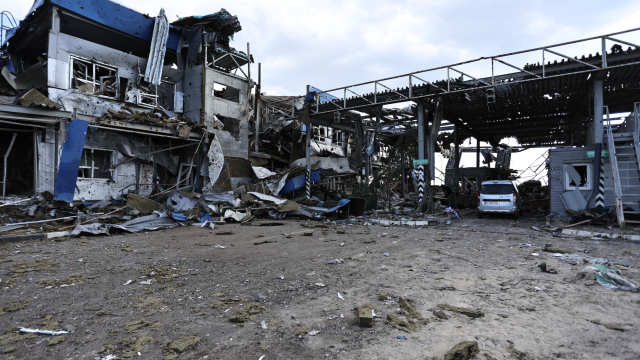

Gas Station Attack
Russia and Ukraine traded accusations on Friday over the shelling of a gas pumping station in Russia’s southwestern Kursk region, reigniting tensions just days after both sides had agreed to a temporary halt in attacks on energy infrastructure.
The attack reportedly took place overnight at the Sudzha gas pumping and metering station, which had been nonfunctional for some time. Images shared by Russian pro-war bloggers and Ukrainian military sources depicted a massive fire illuminating the night sky.
While Russian military bloggers quickly blamed Ukraine for the attack, the General Staff of the Ukrainian Armed Forces dismissed these allegations, calling them part of a “campaign to discredit Ukraine.”
In a statement, Ukraine’s military leadership claimed that Russian forces had, in fact, shelled the facility themselves as part of a coordinated provocation. “Today, the enemy has ramped up its planned destructive information influence with another provocation—it fired artillery at this facility [in Sudzha],” the statement read. The General Staff further alleged that this was not the first time Russia had targeted the station, citing similar incidents that had occurred last summer.
Russia, however, maintained that the attack was the work of Ukrainian forces. Later on Friday, the Russian Defense Ministry claimed that retreating Ukrainian troops were responsible, describing it as a “deliberate provocation… aimed at undermining the peace initiatives of the U.S. President.” The Kremlin also suggested that the strike could jeopardize the ceasefire agreement between the two nations.
The Sudzha gas pumping station had previously played a key role in Russia’s energy exports. Even after launching its full-scale invasion of Ukraine in 2022, Russia continued using the Sudzha hub to transport natural gas to Europe.
However, at the beginning of 2025, Kyiv refused to renew its transit agreement, halting Russian gas supplies through Ukrainian territory. The attack on the Sudzha facility followed Ukraine’s cross-border incursion last August, during which Ukrainian forces briefly took control of the town before Russia reestablished full authority over it last week.
The incident also comes amid ongoing diplomatic tensions surrounding energy infrastructure. Just a day earlier, Russia’s Foreign Ministry had accused Ukraine of violating the agreed-upon 30-day pause in energy-related attacks by striking an oil depot in the southern Krasnodar region. The Kremlin’s spokesperson, Dmitry Peskov, suggested that the Sudzha attack demonstrated Ukraine’s unreliability in upholding agreements.
“This information more than clearly shows how much faith one can have in the word of Zelensky and his team,” Peskov told reporters. However, he assured that Russia would continue to observe the temporary ceasefire on Ukrainian energy infrastructure. “The order of the Supreme Commander-in-Chief is in effect, and the Russian Armed Forces are currently refraining from striking Ukraine’s energy infrastructure in accordance with the agreement that was reached between the United States and Russia,” he stated.
In response to the attack, Russian authorities announced the launch of a criminal investigation, treating the incident as an act of terrorism. It remains unclear how this event will impact the fragile truce between the two nations, but with both sides continuing to trade blame, the risk of renewed hostilities remains high.
