


Russia’s Embassy in South Korea has advised its citizens to avoid attending “mass events,” following the South Korean president’s unexpected declaration of martial law that was withdrawn when S. Korean Parliament rejected it.
“We call on Russian citizens in the Republic of Korea to stay calm, comply with local authorities’ recommendations, and abstain from participating in mass gatherings, particularly those with political undertones,” the embassy stated.
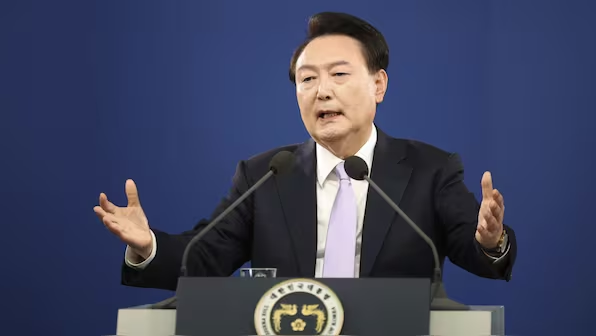
South Korean President Yoon Suk Yeol announced emergency martial law during a televised address, accusing the opposition of being “anti-state forces intent on overthrowing the regime” amid legislative gridlock over a budget bill.
“To protect a free South Korea from threats posed by North Korea’s communist forces and to root out anti-state elements undermining the people’s freedom and happiness, I declare emergency martial law,” Yoon declared.
He criticized the opposition for stalling governance “to pursue impeachments, special investigations, and shielding their leader from accountability,” adding that martial law was “unavoidable to ensure the survival of a liberal South Korea.” Yoon also emphasized that the move would not affect the nation’s foreign policy.
The Russian Foreign Ministry has yet to issue an official response. However, spokeswoman Maria Zakharova questioned how Western nations might react to the situation in South Korea.
“Will the West impose sanctions on Seoul? Or will South Korea escape their scrutiny like Georgia?” Zakharova remarked on Telegram, referencing protests in Georgia over its prime minister’s suspension of EU accession talks.
Yonhap News Agency reported that all military units in South Korea, still technically at war with its nuclear-armed northern neighbor, have been ordered to heighten their alert levels.
Additionally, the entrance to the National Assembly has been sealed, preventing lawmakers from accessing the building, according to Yonhap.
The declaration of martial law coincides with a sharp decline in President Yoon’s approval rating, which fell to 19% last week, as per Gallup Korea. Public discontent has been fueled by his economic policies and controversies involving his wife, Kim Keon Hee.
