

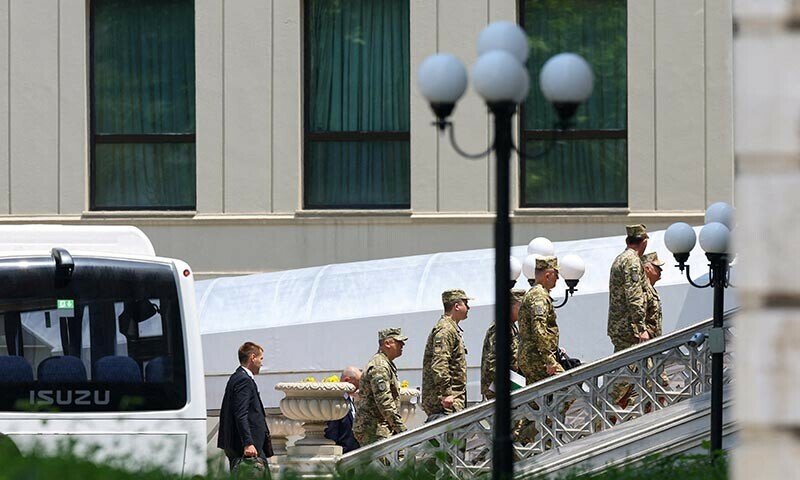

ISTANBUL – In a significant diplomatic development, Russia and Ukraine exchanged proposals for ending their ongoing war during peace talks held in Istanbul on Monday. The high-stakes meeting marked the first direct negotiations between the two sides in over a year, as efforts intensify to resolve Europe’s most devastating conflict since World War II.
Ukrainian President Volodymyr Zelensky reaffirmed his position that peace must not come at the cost of rewarding Russian aggression. “The aggressor must not be compensated for war. Putin must gain nothing that would justify his invasion,” Zelensky said during a press briefing in Vilnius shortly after the talks concluded.
Despite the lack of a ceasefire, the negotiations—facilitated by Turkey—followed up on a previous Istanbul round that led to a significant prisoner swap but failed to halt hostilities.
Renewed Diplomatic Push
The talks come amid renewed international pressure, including from U.S. President Donald Trump, for both nations to return to dialogue. Monday’s session took place at Istanbul’s historic Ciragan Palace, where Turkish Foreign Minister Hakan Fidan declared that “the eyes of the world are on these discussions.”
Delegations from both nations exchanged peace roadmaps via Turkish mediators. Zelensky confirmed the talks also included discussions on another prisoner exchange.
Unyielding Positions
While Kyiv insists on a full and unconditional ceasefire as a precursor to long-term peace, Moscow continues to demand broader concessions—including Ukrainian neutrality, military limitations, and territorial adjustments. These positions remain far apart.
Ukrainian sources close to the talks said progress depends on Russia moving beyond “recycled ultimatums.” One delegate remarked, “If Moscow is truly ready to compromise, today could bring meaningful news.”
However, Russian demands remain focused on what they call addressing the “root causes” of the war—language Kyiv and its allies interpret as justification for Russia’s expansionist ambitions.
On the Ground: Escalation and Resistance
The talks coincided with Ukraine’s most daring attack inside Russian territory to date. Kyiv confirmed a covert drone operation targeting Russian airbases deep behind enemy lines, damaging around 40 strategic bombers—reportedly worth $7 billion. Ukrainian officials said the plan was in preparation for over 18 months and involved launching drones from within Russia itself.
Meanwhile, on the battlefield, Russia has accelerated its territorial advances in May, according to the Institute for the Study of War. Despite military setbacks, Kyiv continues to push back diplomatically and through asymmetric operations.
Skepticism at the Front
In war-torn eastern Ukraine, civilians and soldiers alike voiced skepticism about the Istanbul negotiations. In Dobropillya, one resident displaced by the conflict said, “We have no home left. I don’t believe anything will change.”
A soldier stationed in nearby Kramatorsk echoed that sentiment, though he added, “If they could just agree to pause the fighting, at least we could recover the bodies of our comrades. Even a brief respite would mean something.”
Future Hangs in Balance
As talks continue, Ukraine maintains it is open to diplomatic solutions for recovering Russian-occupied territories but demands firm international security guarantees—something Moscow has staunchly rejected.
With tens of thousands dead, millions displaced, and both sides locked in a war of attrition, Monday’s exchange of peace plans offers a rare flicker of hope—though one dimmed by deep mistrust and unresolved demands.
