

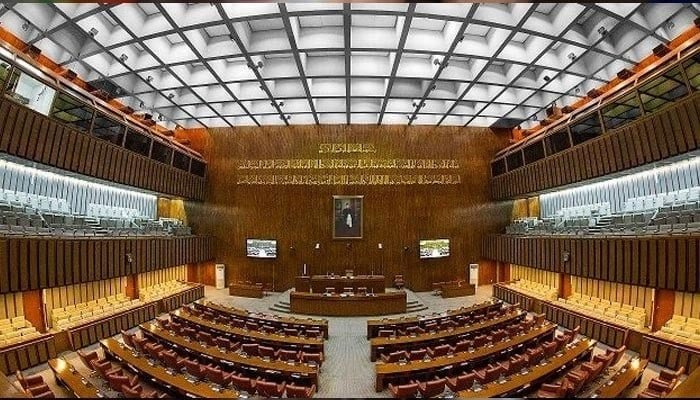

The Senate Standing Committee on Water Resources, chaired by Senator Shahadat Awan, convened on Thursday to examine recent Indian actions in violation of the Indus Waters Treaty (IWT), warning that such “water aggression” crosses a red line for Pakistan.
During the meeting, Pakistan’s Commissioner for Indus Waters, Syed Muhammad Mehar Ali Shah, emphasized that the IWT is a bilateral and legally binding agreement between Pakistan and India, and cannot be unilaterally suspended by either party. He stated that India’s attempts to obstruct the flow of western rivers constitute a blatant breach of the treaty’s provisions.
The committee, backed by officials from the Ministry of Water Resources, unanimously rejected India’s unilateral move to suspend the treaty following the alleged false flag operation in Pahalgam. They warned that this provocative action poses a serious threat to Pakistan’s water security, agricultural productivity, and the livelihoods of over 250 million citizens.
The committee reaffirmed that under Clause 4 of Article XII of the IWT and the Vienna Convention on the Law of Treaties (1969), no country has the authority to unilaterally suspend or terminate the agreement. They also referenced the recent statement by the President of the World Bank, who reiterated that the treaty remains binding and enforceable on both sides.
Calling the treaty vital for Pakistan as a lower riparian state, the committee stressed its importance for ensuring food security and agricultural stability, especially in the face of intensifying climate change and unpredictable monsoon patterns.
The committee also strongly condemned India’s alleged attack on Pakistan’s Neelum-Jhelum Hydropower Project, labeling it an act of “water warfare” and a deliberate attempt to destabilize the region.
Members warned that India’s weaponization of the IWT represents a serious escalation and could jeopardize the fragile ceasefire between the two nations. The committee declared that any further tampering with Pakistan’s rightful water share would be met with a firm response—legally and diplomatically—at all international platforms.
In conclusion, the committee called on the global community to urgently address India’s violations and emphasized that Pakistan will defend every drop of water allocated under the treaty as a matter of sovereign right.
