

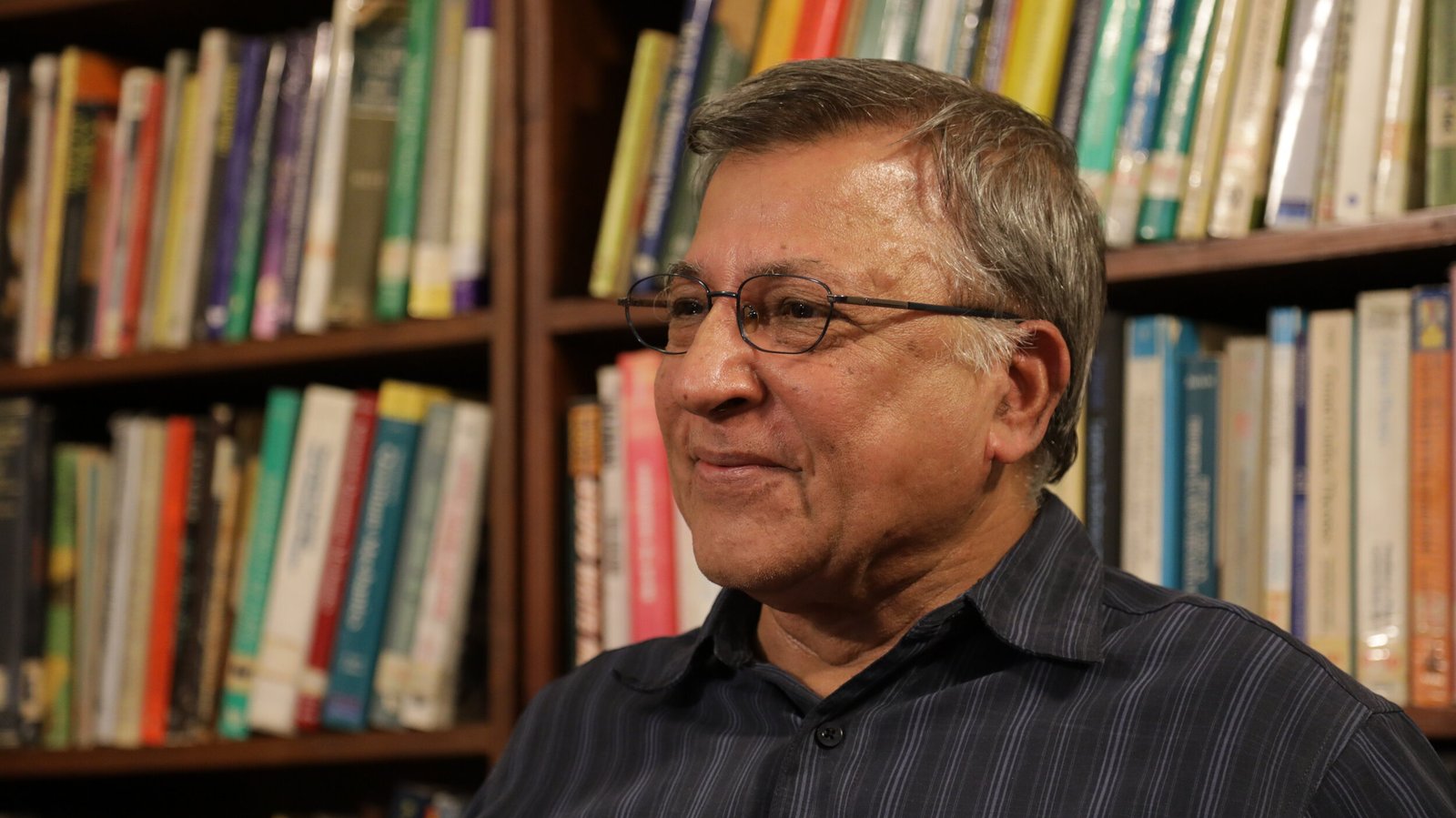

Renowned nuclear physicist and activist Pervez Hoodbhoy has stated that shutting down universities in Pakistan would not significantly harm the country, given the current quality of education in public institutions.
“Even if you close down the universities, Pakistan wouldn’t suffer any loss,” he remarked during an appearance on Aaj News’s Dus program aired on Sunday. Hoodbhoy expressed regret over the situation, pointing out that even universities in the United States focus on preparing students for the job market.
Hoodbhoy, who appeared on the show to discuss Pakistan’s education system, urban management, and his recent visit to Karachi, has previously held faculty positions in physics and mathematics at Forman Christian College-University in Lahore, Lahore University of Management Sciences, and Quaid-e-Azam University in Islamabad.
As a UNESCO Kalinga Prize laureate, Hoodbhoy criticized the value of Pakistan’s degrees, labeling them “pieces of paper” with little global recognition.
Reflecting on his trip to Karachi, he shared that visiting the city fills him with concern due to its lost greenery, traffic violations, and poor sanitation. Hoodbhoy expressed sorrow at the transformation of his birthplace, noting that he moved to Islamabad to escape Karachi’s growing population.
Advocating for smaller administrative divisions to improve governance, he questioned why Pakistan couldn’t have more provinces like India, adding that Pakistan is dealing with an “exploding population bomb.”
Predicting that Pakistan’s population will reach 400 million by its centennial, he warned, “Within five generations, Pakistan’s population could rival that of the world’s. This crisis is more threatening than a nuclear bomb.”
He emphasized the need to address inequalities, stating, “There should be no ‘ruler’ province; all provinces must be treated as equals.” Hoodbhoy argued that Pakistan would thrive only when every citizen, regardless of background, is respected.
Addressing the host’s question about brain drain, he noted that this term originally referred to the loss of top talent in the 1950s and 60s. “Last year, 80% of work visas from Pakistan were issued for drivers, not top professionals.”
Hoodbhoy criticized Pakistan’s education system, alleging it is designed to suppress critical thinking. He attributed this culture to the country’s examination system and authorities. “After 47 years of teaching at Quaid-e-Azam University, I can say that few of our professors would qualify for India’s IIT entrance exams,” he stated, lamenting the lack of passion among teachers.
He also described the restrictive atmosphere at QAU as prison-like, with some teachers more concerned about construction contracts than teaching.
Noting widespread disillusionment, Hoodbhoy urged young people not to rely on agents for migration but instead to gain market-relevant skills.
In response to a question, he voiced concern about the rise of Taliban-like ideologies in Pakistan. He argued that the single national curriculum was intended to bring schools and religious seminaries to similar standards but criticized the government for its ineffective implementation in madrassas.
Stressing that science involves reasoning, experimentation, and observation rather than rote memorization, Hoodbhoy criticized political parties for neglecting essential educational and infrastructural reforms. “We need a democracy where citizens have a voice,” he concluded.
