

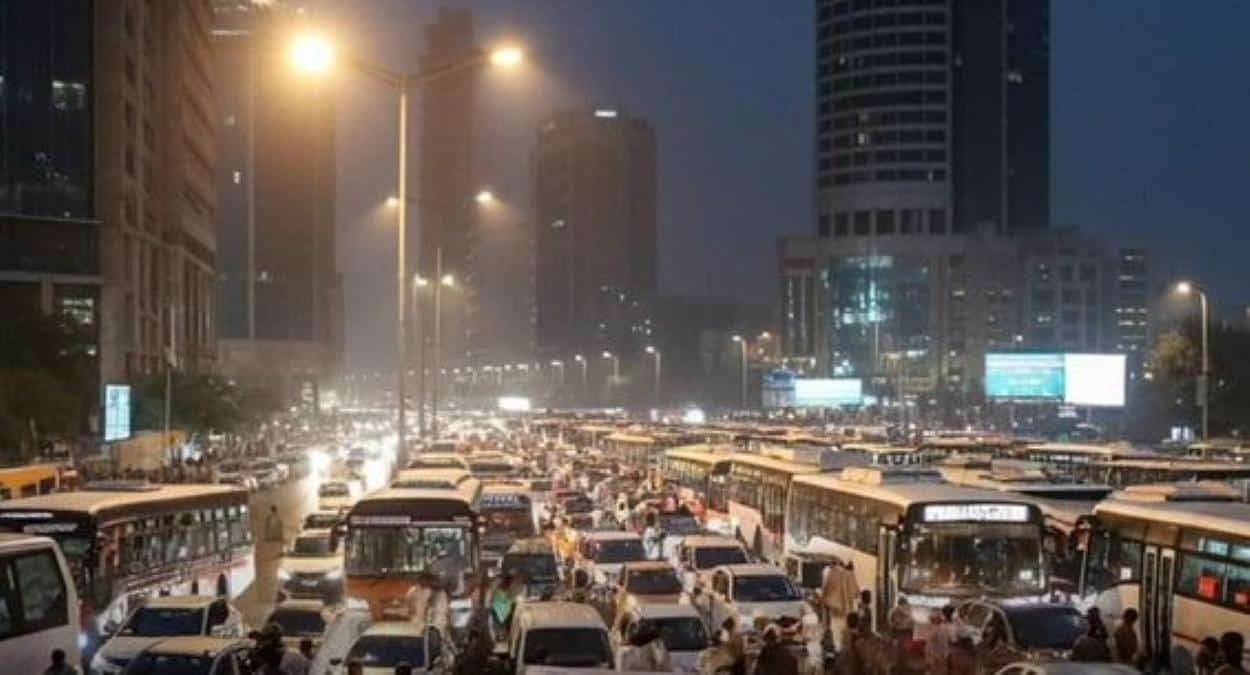

The Sindh government has appealed to religious scholars to help end ongoing sit-ins by the Majlis Wahdat-e-Muslimeen (MWM) across Karachi, which have disrupted traffic flow for six consecutive days. The protests, held at 14 key locations, aim to highlight concerns over escalating tensions and violence in Parachinar, where over 130 fatalities have been reported since November.
A government spokesperson, Sadia Javed, emphasized that a recent jirga has addressed the Kurram issue, making it unnecessary to continue the sit-ins in Karachi. She urged protesters to relocate to a designated area, such as the road outside the Press Club, to alleviate the suffering caused to the city’s residents.
The demonstrations have caused severe traffic congestion at multiple locations, including Sharea Faisal, Gulistan-e-Jauhar, Numaish Chowrangi, Korangi, and Five Star Chowrangi. Despite alternative routes provided by traffic police, citizens face significant delays, with ambulances struggling to reach patients.
Karachi police chief Javed Alam Odho and Commissioner Syed Hassan Naqvi met with MWM leaders to discuss confining the protests to fewer locations. Senior MWM leader Hassan Zafar Naqvi reiterated the peaceful nature of the sit-ins, emphasizing their non-sectarian and inclusive approach. He clarified that the protests aim to express solidarity with Parachinar’s residents and are not politically motivated.
Naqvi added that the demonstrations would end if directed by MWM chief Allama Raja Nasir Abbas and highlighted the deteriorating conditions in Parachinar, including shortages of fuel, gas, and medical supplies.
Karachi Mayor Murtaza Wahab criticized the blockades, describing them as counterproductive and damaging to newly constructed roads. Sindh Chief Minister Murad Ali Shah also urged demonstrators to avoid public inconvenience, stating that blocking roads in Karachi would not solve Parachinar’s issues.
Meanwhile, the Sindh governor’s office confirmed the delivery of medical supplies and aid to Parachinar via helicopter to address the humanitarian crisis exacerbated by the closure of the highway connecting the region to Peshawar.
Parachinar, located near the Afghan border, has a population of 600,000 and a history of tribal conflicts, further straining the region’s already fragile resources.
