

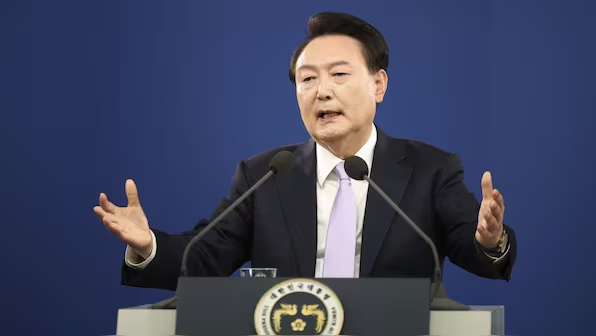

South Korean President Yoon Suk Yeol announced on Wednesday that he would lift the martial law declaration imposed just hours earlier, following a parliamentary vote rejecting the measure. The decision came amid the nation’s most significant political crisis in decades.
Yoon had declared martial law late Tuesday, citing a need to counter “anti-state forces” among his political opponents. However, lawmakers swiftly condemned the move, with 190 members of parliament voting unanimously to overturn the decree. Under South Korean law, a parliamentary majority vote against martial law requires its immediate withdrawal. Even members of Yoon’s own party, including party leader Han Dong-hoon, urged him to rescind the order.
The crisis escalated when helmeted soldiers, allegedly tasked with enforcing martial law, attempted to enter the parliamentary building early Wednesday. Live broadcasts captured scenes of parliamentary aides using fire extinguishers to deter the troops. Protesters gathered outside the assembly, chanting slogans such as “Withdraw emergency martial law!” and “Arrest Yoon Suk Yeol.”
Yoon defended his decision, accusing opposition parties of hijacking the parliamentary process and vowing to eliminate “pro-North Korean anti-state forces.” The military, under martial law, had announced restrictions on political activity and stated that media outlets would be subject to military oversight.
The declaration drew widespread domestic and international criticism, with many viewing it as a severe challenge to South Korea’s democratic traditions, which have been firmly established since the 1980s. This marks the first instance of martial law in South Korea since 1980, a stark reminder of its authoritarian past.
