

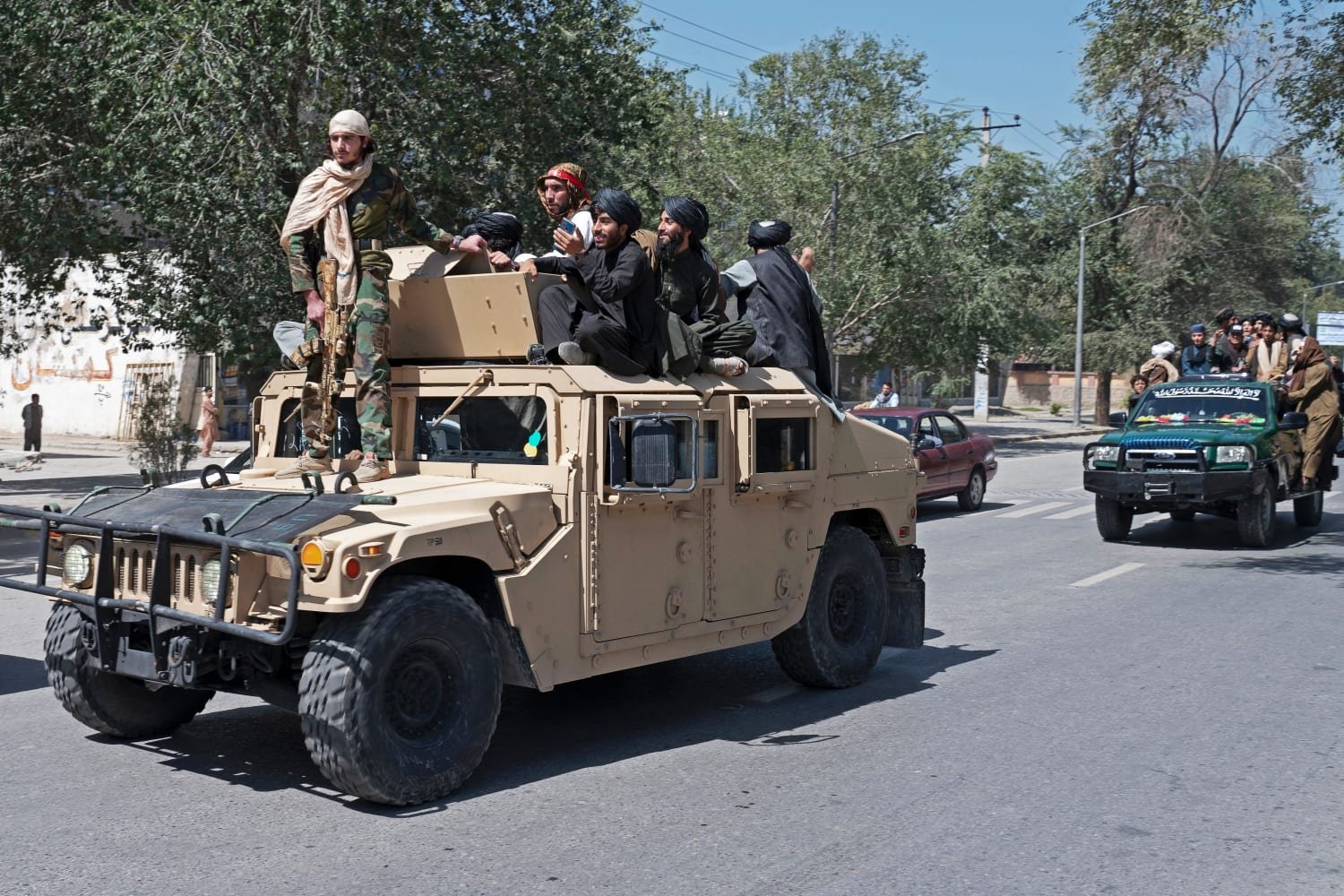

Roughly 500,000 weapons seized by the Taliban in Afghanistan are now missing, sold, or believed to have been smuggled to militant groups, raising serious global security concerns.
When the Taliban took control of Afghanistan in 2021, they inherited a vast stockpile of military equipment, primarily funded and supplied by the United States. This arsenal, which included modern firearms such as M4 and M16 rifles, as well as older weapons from previous conflicts, was left behind as Afghan forces retreated or surrendered, and as U.S. troops withdrew.
A former Afghan official revealed that many soldiers abandoned their posts during the Taliban’s rapid advance, often leaving behind weapons and vehicles. Additionally, some U.S. military equipment was not recovered and became part of the Taliban’s haul.
In a confidential meeting held last year in Doha, the Taliban reportedly acknowledged that around half of this equipment—about 500,000 weapons and other items—is now “unaccounted for.”
Concerns have been raised by international security bodies that some of these weapons have made their way to extremist groups. A February report noted that groups such as Tehreek-e-Taliban Pakistan, the Islamic Movement of Uzbekistan, the East Turkestan Islamic Movement, Yemen’s Ansarullah, and others have gained access to these arms, either directly or via black market purchases.
A Taliban representative stated that all weapons are being securely stored and dismissed any allegations of smuggling or loss. However, intelligence reports suggest otherwise. A 2023 assessment indicated that Taliban field commanders were allowed to keep 20% of the captured weapons, which has contributed to a thriving arms black market. These commanders, who often operate independently, have reportedly engaged in weapon trading for political leverage.
The informal arms market, once openly operating in places like Kandahar, has since gone underground, with transactions now facilitated through platforms like WhatsApp. Wealthy individuals and local power brokers are reportedly involved in the sale and purchase of both new and used weapons once supplied by Western forces.
The U.S. body overseeing reconstruction efforts in Afghanistan acknowledged that its records on the weapons left behind were incomplete due to disjointed tracking systems among various U.S. departments. While the actual number of weapons may vary across sources, all point toward a serious accountability failure.
The political fallout continues, with former U.S. President Donald Trump vowing to retrieve the equipment, although his estimates of $85 billion include training, maintenance, and operational costs—not just military hardware. Despite his claims, Afghanistan was not listed among the top global arms exporters last year.
In contrast, Taliban leaders assert that the seized weaponry was taken from the previous Afghan government and will be used strictly for national defense. The Taliban has frequently showcased American-made equipment—particularly at strategic locations like Bagram Airfield—as a demonstration of their military strength.
Although the U.S. Department of Defense claimed much of the equipment was disabled before withdrawal, the Taliban has nonetheless constructed a functional military force with what remains. While they face limitations in maintaining complex systems such as Black Hawk helicopters due to lack of technical expertise, simpler assets like Humvees and rifles are being used effectively.
Former U.S. officials have noted that any operation to retrieve these weapons would be costly and largely impractical. Meanwhile, the uncontrolled spread of these arms continues to pose a risk of escalating violence across the region.
