

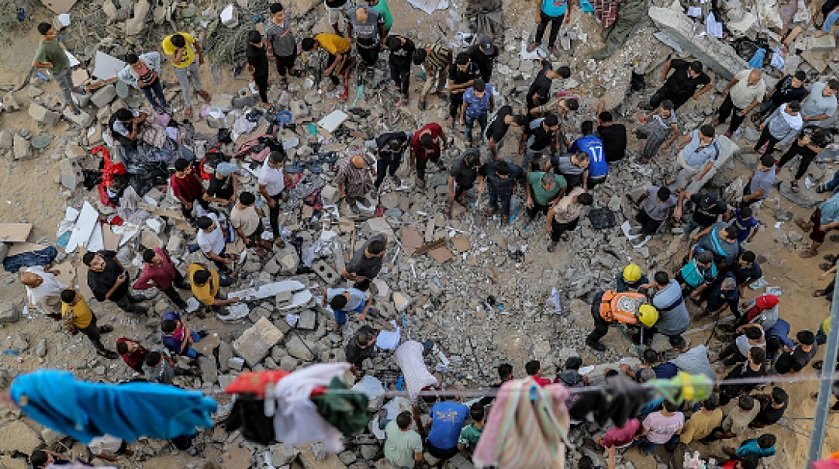

TEHRAN: The Gazan Health Ministry reported a somber update, stating that the death toll in Gaza from Israel’s conflict has now surpassed 25,000, with approximately 70 percent of the casualties being women and children.
The unfolding tragedy in Gaza casts a pervasive shadow over the region, with the recent 24-hour period witnessing a surge in casualties—178 Palestinians lost their lives, and 293 sustained injuries, emphasizing the ongoing humanitarian crisis in the besieged area.
The UN chief expressed deep concern, describing the civilian killings in Gaza as “heartbreaking and utterly unacceptable.”
The Gazan Health Ministry anticipates a further rise in casualties and injuries as rescue efforts continue, with dozens still believed to be trapped under the rubble, according to Tehran Times report.
Homes, once sanctuaries, now crumble due to Israeli actions, leaving families shattered. In early January, Gaza’s media office reported that over 65,000 tons of bombs were dropped by Israel, causing approximately 33 percent of buildings in the entire Gaza Strip to be destroyed, according to satellite data cited by the Associated Press.
The United Nations estimates that nearly 85 percent of Gaza’s population, totaling 1.9 million people, have been internally displaced, and over 90 percent face acute food insecurity. The situation is exacerbated by a severe lack of aid entering the enclave, with one in four people in Gaza reportedly starving.
The UN Relief and Works Agency for Palestine Refugees (UNRWA) highlighted the complexity of the humanitarian operation, labeling it one of the most challenging globally.
The scale of death, destruction, and displacement in this conflict is unprecedented in the decades-long Israeli-Palestinian conflict, and the relentless bombardment of Gaza shows no signs of easing.
The UN has repeatedly warned about the inadequate capacity of its shelters to cope with the overwhelming influx of displaced Palestinians.
As the humanitarian catastrophe unfolds, there is a plea for empathy, compassion, and a committed effort to end the suffering. Each casualty is more than a statistic; it is a poignant reminder of the profound human cost exacted by the conflict.
Speaking at a global summit in Kampala, Uganda, UN Secretary-General António Guterres denounced Israel’s three-month assault, calling it “heartbreaking and utterly unacceptable.” Despite Israel’s determination to achieve “complete victory,” there are growing doubts about the feasibility of its goals, even among some top Israeli officials.
Former army chief Gadi Eisenkot, a member of Israel’s war cabinet, publicly stated that the only way to free remaining hostages is through a ceasefire, openly challenging Prime Minister Benjamin Netanyahu’s claims to the contrary.
