


Dhaka
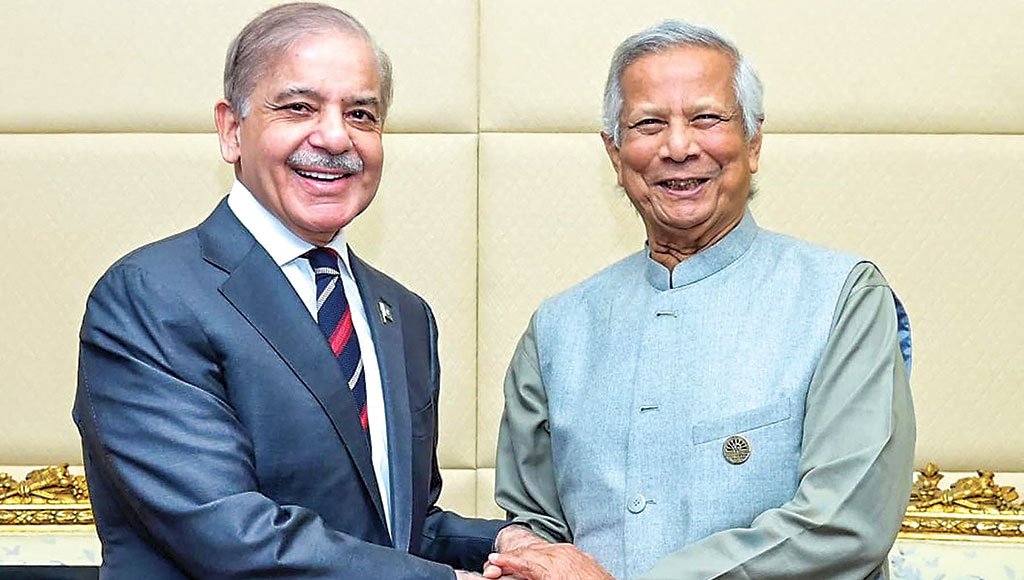
ISLAMABAD: During a meeting with Prime Minister Shehbaz Sharif on the sidelines of the D-8 summit of developing nations in Cairo, Bangladesh’s interim leader expressed a desire to resolve longstanding grievances stemming from the 1971 separation of East Pakistan, now Bangladesh, from Islamabad. The civil war that led to the split remains a sensitive chapter in the history of both nations.
“The issues have resurfaced repeatedly. Let’s resolve them to move forward,” Dr. Muhammad Yunus, the Nobel laureate and chief adviser to Bangladesh’s interim government, reportedly told PM Shehbaz, as per a statement from Yunus’s office quoted by AFP.
This marks a significant shift from Dhaka’s previous stance under Sheikh Hasina’s government, which maintained close ties with India while keeping Pakistan at a distance. However, a recent uprising that led to Hasina’s ouster in August has opened the door for a thaw in bilateral relations, with notable improvements in trade and diplomacy.
PM Shehbaz emphasized the shared historical, religious, and cultural ties between the two nations and expressed Pakistan’s interest in expanding cooperation in trade, cultural exchanges, and people-to-people contacts.
He praised Bangladesh for recent measures such as waiving the requirement for 100% physical inspection of Pakistani consignments and abolishing additional scrutiny of Pakistani passengers at Dhaka airport. The removal of extra visa clearance requirements was also acknowledged.
Dr. Yunus reiterated the importance of reviving the South Asian Association for Regional Cooperation (SAARC), which has been largely dormant due to disputes between Islamabad and New Delhi.
Both leaders expressed satisfaction with recent positive developments in bilateral ties and agreed to strengthen cooperation across various sectors, including trade in chemicals, surgical goods, leather, and IT.
On the sidelines of the summit, PM Shehbaz held bilateral meetings with global leaders, including Iranian President Masoud Pezeshkian and Turkish President Recep Tayyip Erdogan.
With President Pezeshkian, he discussed operationalizing border markets to benefit communities living along the Iran-Pakistan border and sought Iran’s support for Pakistan’s BRICS membership.
In talks with President Erdogan, PM Shehbaz emphasized enhancing economic cooperation and achieving a bilateral trade target of $5 billion, while reiterating mutual support on key national issues.
At the D-8 Summit, PM Shehbaz highlighted Pakistan’s demographic advantage, with 60% of its population under 30, and emphasized investments in youth and small and medium enterprises (SMEs).
He announced Pakistan’s federal cabinet approval for implementing the D-8 Preferential Trade Agreement and its dispute resolution protocols. Stressing the importance of global peace, he called for a ceasefire in Gaza and urged world leaders to address the humanitarian crisis in the region.
The summit provided a platform for member nations to share best practices, pool resources, and support youth and SMEs, aligning with the event’s theme of “Investing in Youth and Supporting Small and Medium Enterprises.” PM Shehbaz’s participation underscored Pakistan’s commitment to regional collaboration and addressing pressing global issues.
