


Trade-Driven Ceasefire
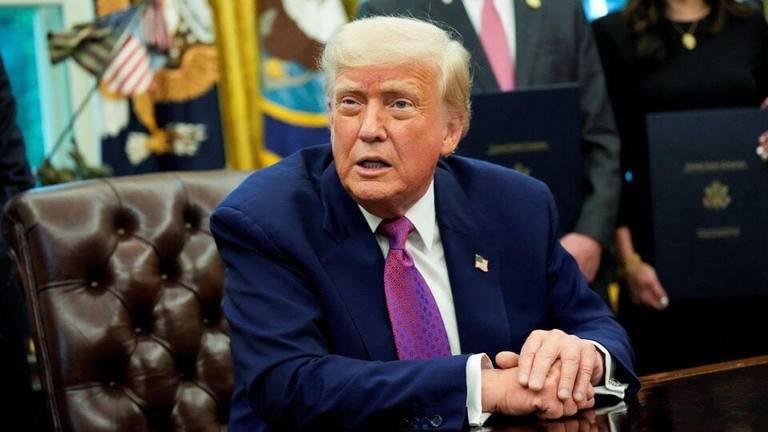
United States President Donald Trump once again reiterated his involvement in easing the recent tensions between Pakistan and India, emphasizing that he played a key role in settling the cross-border exchange of fire through trade leverage.
His remarks came during a meeting with South African President Cyril Ramaphosa, where Trump highlighted the importance of ongoing trade negotiations with both countries as a foundation for peace.
In this conversation, Trump recounted how he engaged with leaders from Pakistan and India amid escalating hostilities, which followed New Delhi’s military operation named “Operation Sindoor.” The operation had triggered a series of retaliatory cross-border attacks, pushing the conflict to a dangerous and intensifying level. Trump described the situation as deteriorating rapidly, “getting worse and worse, bigger and bigger, deeper and deeper into the country,” signaling the risk of a larger conflict.
According to Trump, he questioned the two sides during his diplomatic efforts, asking, “What are you guys doing?” and expressed that through dialogue and leveraging trade relationships, he helped de-escalate the situation. He claimed that his intervention led to the ceasefire, although he wryly noted that shortly after the announcement, tensions flared again, with some blaming him for the renewed clashes.
While Pakistan has publicly acknowledged and thanked Trump for his role in mediating the ceasefire, India has remained silent on his involvement and has not confirmed any direct participation by the US president. India also disputed some claims that Pakistan violated the ceasefire hours after the agreement, casting doubt on the narrative.
During the discussion, Trump praised the leadership on both sides, referring to Pakistan’s leaders as “excellent people” and expressing his friendship with Indian Prime Minister Narendra Modi. Ramaphosa reportedly agreed, acknowledging Modi as a “mutual friend,” signaling a shared respect among the three leaders.
Overall, Trump’s statements reflect his continued efforts to position himself as a key diplomatic player in resolving the long-standing conflict between Pakistan and India, emphasizing trade as a tool for peace.
However, the differing responses from Islamabad and New Delhi highlight the complexities and sensitivities involved in the region’s geopolitical dynamics.
