

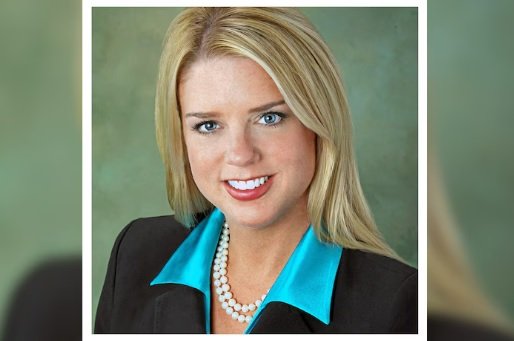

U.S. Attorney General Pam Bondi said on Sunday that any attempt by Donald Trump to legally pursue a third term as president would face nearly insurmountable legal and constitutional hurdles.
“I wish we could have him for 20 years as our president,” Bondi told Fox News Sunday. “But I think he’s going to be finished, probably, after this term.”
The U.S. Constitution, following the 22nd Amendment passed in 1947, limits presidents to two terms in office. Changing that rule would require a constitutional amendment — a process that demands two-thirds approval in both the House and Senate, along with ratification from three-quarters of U.S. states — a feat experts view as highly improbable in the current political climate.
“That’s really the only way to do it,” Bondi acknowledged. “It’d be a heavy lift.”
Trump, now 78, sparked controversy on March 31 when he told NBC News he was “not joking” about exploring ways to run for a third term, claiming there are unspecified “methods” that could allow it.
While many dismissed Trump’s remarks as rhetorical flair, Bondi’s comments — especially as a staunch ally serving as attorney general — signal that the legal pathway is virtually non-existent under current constitutional law.
During her appearance, Bondi also criticized the intense legal scrutiny the Trump administration has faced, noting that over 170 lawsuits have been filed against the White House. “That should be the constitutional crisis right there,” she said. “We’ll continue to fight.”
She also defended the Justice Department’s decision to seek the death penalty in the high-profile case of Luigi Mangione, accused of murdering health insurance executive Brian Thompson in New York on December 4, 2024.
“The president’s directive was very clear: we are to seek the death penalty when possible,” Bondi said. “If there was ever a death case, this is one.”
Bondi further celebrated a recent Supreme Court win for the administration, which upheld the Education Department’s move to freeze $64 million in DEI (Diversity, Equity, and Inclusion) grants related to teacher training and professional development — a move that critics called politically charged, but one the administration defended as a recalibration of federal spending priorities.
