

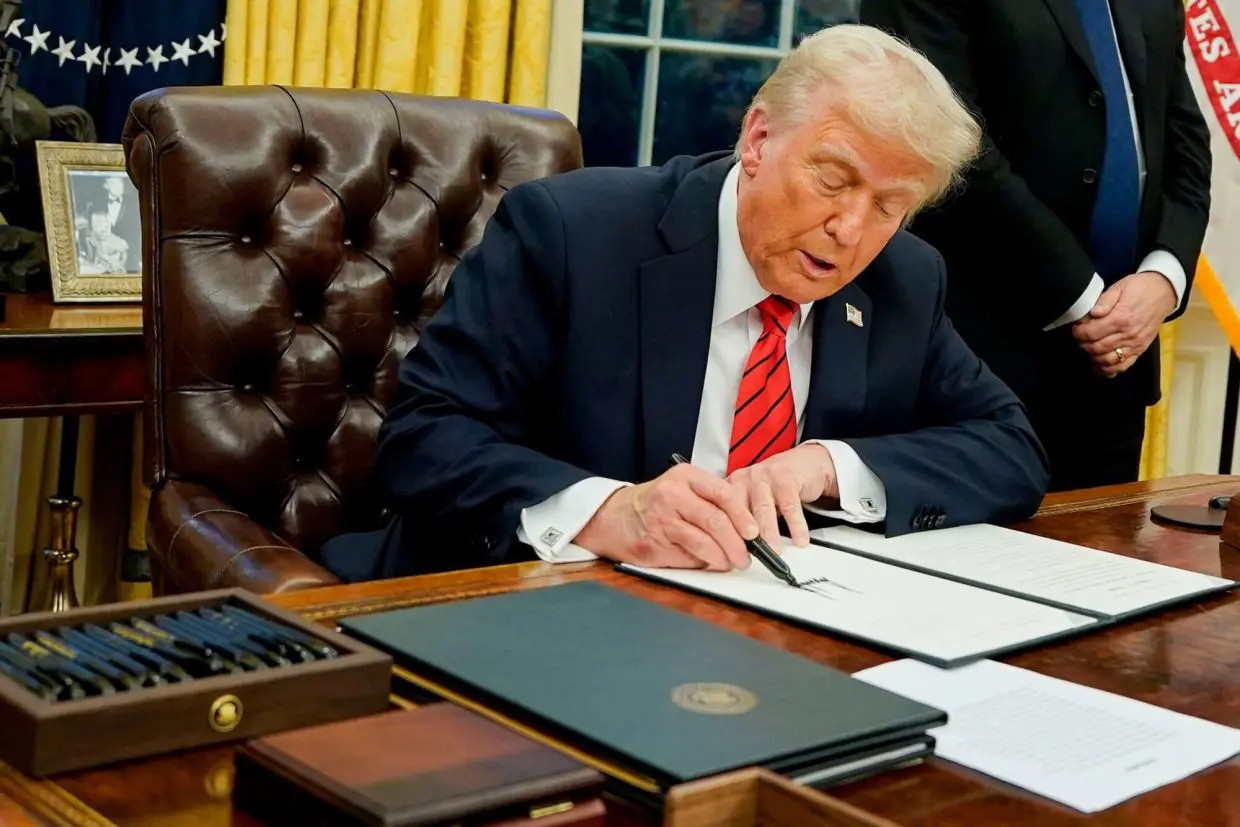

US President Donald Trump signed executive orders on Monday to impose a 25% tariff on steel and aluminium imports, intensifying a trade war despite objections from Europe and China. The move, which Trump had previously announced while en route to the Super Bowl in Louisiana, is a continuation of his protectionist policies aimed at shielding US industries.
Speaking in the Oval Office, Trump stated, “Today I’m simplifying our tariffs on steel and aluminium. It’s 25% without exceptions or exemptions.” He also hinted at additional tariffs targeting other sectors, including automobiles, pharmaceuticals, and computer chips.
According to US trade data, Canada and Brazil are the largest steel exporters to the US, with South Korea also being a key provider. Trump has expressed the possibility of granting Australia an exemption from the steel tariffs, citing a trade surplus between the two countries.
Trump’s administration has already implemented sweeping tariffs during his first term (2017-2021) to protect US industries from what he deemed unfair competition from foreign markets. This latest round of tariffs comes amid warnings from Canadian steelmakers of potential disruptions and opposition from the European Union, which vowed to respond to protect European businesses. French President Emmanuel Macron also voiced concerns about the broader implications of Trump’s tariff threats against the EU, though he emphasized the need for the US to focus its efforts on China.
Around 25% of European steel exports are directed to the US, and British steelmakers called the tariff plans a “devastating blow” to their industry.
The trade war extended to China, where Trump had already imposed tariffs, resulting in retaliatory tariffs on US coal and liquefied natural gas. Experts suggest that while Trump maintains tariffs won’t impact US consumers, many believe the economic pain will eventually be felt domestically.
Despite the trade tensions, global stock markets rose, with indices in London, Frankfurt, Hong Kong, and Shanghai reaching new highs, which analysts attribute to “tariff fatigue.”
