

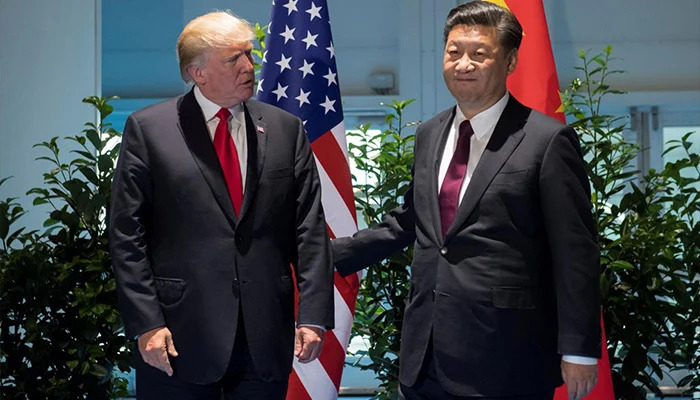

WASHINGTON: The United States and China have agreed to extend their ongoing tariff truce by another 90 days, delaying a potentially severe escalation in their trade dispute. The move comes just hours before the truce was set to expire, offering relief to businesses and consumers ahead of the crucial holiday import season.
U.S. President Donald Trump, in a post on his social media platform Truth Social, confirmed that he had signed an executive order postponing the planned increase in tariffs until November 10 at 12:01am EST. The order maintains the current tariff rates—30% on Chinese imports and 10% on U.S. exports—while halting a planned surge to 145% and 125% respectively, which analysts said could have triggered a near-total freeze in trade between the two economic giants.
In a coordinated move, China’s Ministry of Commerce also announced early Tuesday that it would suspend the imposition of additional tariffs and delay the blacklisting of U.S. firms it had previously targeted in April.
Truce Extension Signals Progress in Trade Talks
Trump’s executive order stated that the People’s Republic of China (PRC) “continues to take significant steps toward remedying non-reciprocal trade arrangements and addressing the concerns of the United States relating to economic and national security matters.”
Officials from both sides have framed the extension as a mutual de-escalation, aimed at providing room to resolve long-standing issues around trade reciprocity, export controls, market access, and overcapacity. The extension also aligns with the June 5 call between President Trump and Chinese President Xi Jinping, during which both leaders agreed to work toward a framework for a broader trade deal.
Wendy Cutler, a U.S. trade negotiator, said the extension was a “positive signal” that both sides are serious about crafting a longer-term agreement. “With the 90-day extension and recent de-escalatory measures, there’s clear intent to create the groundwork for a potential Trump-Xi meeting this autumn,” she noted.
Meanwhile, Trump hinted that a summit with Xi could take place before year’s end if negotiations progress.
Business Relief and Global Impact
Retailers in the U.S., particularly those importing electronics, clothing, and toys, welcomed the decision, as it gives them breathing room ahead of the peak holiday season. U.S. importers had earlier accelerated shipments to avoid higher tariffs, causing a spike in imports earlier this year. However, data from the Commerce Department last week showed a sharp drop in imports from China in June, with the U.S. trade deficit narrowing by 70% over five months.
Treasury Secretary Scott Bessent reiterated that the previously proposed triple-digit tariffs were “untenable” and had effectively imposed a trade embargo between the world’s two largest economies.
Kelly Ann Shaw, a former Trump White House trade official, said the president likely held out until the last moment to pressure Beijing for additional concessions. Trump’s Sunday demand for quadrupled Chinese soybean purchases was one such ask, though he did not repeat it on Monday.
In a broader context, Washington has also continued to pressure China to limit its oil purchases from Russia, threatening secondary sanctions in connection with the Ukraine conflict.
Ryan Majerus, another former U.S. trade official, said the truce would ease business anxieties on both sides: “It gives time and space for negotiators to work toward a comprehensive deal by the fall.”
