

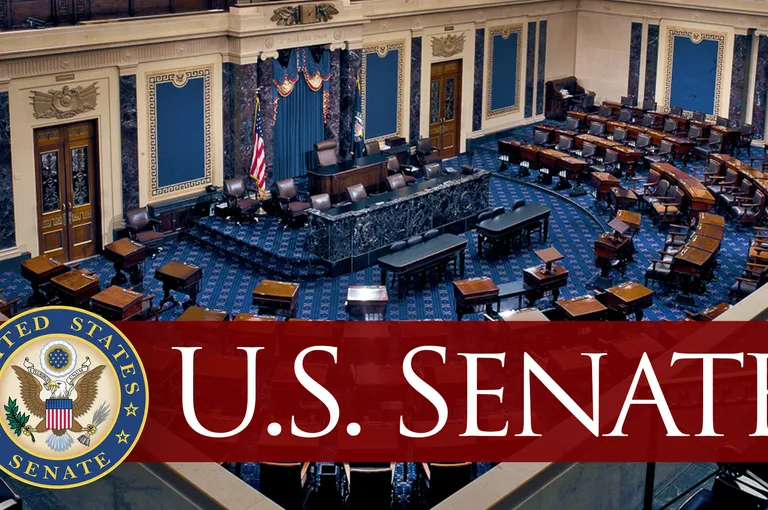

WASHINGTON, D.C.: The U.S. Senate on Friday rejected a Democrat-led resolution aimed at limiting former President Donald Trump’s authority to launch military attacks against Iran, dealing a blow to congressional efforts to reassert its constitutional war powers.
The measure, introduced by Senator Tim Kaine (D-Va.), failed in a 53–47 vote, with most Senate Republicans standing behind Trump following recent strikes on Iranian nuclear sites. The resolution sought to require the president to obtain congressional approval before initiating new offensive military action against Iran.
While the proposal would not have restricted the president’s ability to respond to direct threats, it would have mandated congressional debate and authorization before any preemptive or offensive strikes.
“This isn’t about handcuffing the president,” Kaine said on the Senate floor. “It’s about making sure we don’t go to war without a political consensus and without the people’s representatives being involved.”
GOP Stands with Trump
Republicans, who hold the Senate majority, largely defended Trump’s unilateral actions, citing national security concerns.
“We must not shackle our president in the middle of a crisis when lives are on the line,” said Senator Bill Hagerty (R-Tenn.). “Iran poses an ongoing threat that requires decisive leadership.”
Trump himself signaled he would not hesitate to authorize further military action, saying, “Sure, without question,” when asked if he would order additional strikes on Iranian nuclear sites if needed.
Only a few Republicans, including Senator Rand Paul (R-Ky.), broke ranks, supporting the resolution and criticizing the erosion of congressional oversight.
“The Constitution is clear — Congress holds the power to declare war,” Paul said. “Presidents cannot act unilaterally unless there is an imminent threat.”
War Powers Debate Resurfaces
The vote marked the most serious attempt in years by lawmakers to reclaim their war-making authority under the 1973 War Powers Resolution, which requires presidents to consult Congress “in every possible instance” before committing U.S. forces to hostilities.
In a letter to Congress earlier this week, Trump described the Iran strikes as “limited in scope and purpose” and framed them as a deterrent. However, some lawmakers were unconvinced after classified briefings with administration officials.
“There was no imminent threat to the United States,” said Rep. Jim Himes (D-Conn.), ranking member of the House Intelligence Committee. “This wasn’t materially different from two weeks earlier.”
Despite such skepticism, most Republicans argued that the resolution would weaken the president during sensitive negotiations and undermine unity in foreign policy.
Ongoing Tensions
Although Trump later announced that a ceasefire with Iran was in place, tensions between Washington and Tehran remain high. Iran’s Supreme Leader Ayatollah Ali Khamenei issued a warning against future U.S. attacks, while American officials indicated that diplomatic channels could reopen soon.
As debate over presidential war powers continues, the failed resolution highlights the ongoing struggle between Congress and the executive branch over control of U.S. military force — a battle reignited by Trump’s aggressive posture toward Iran.
