

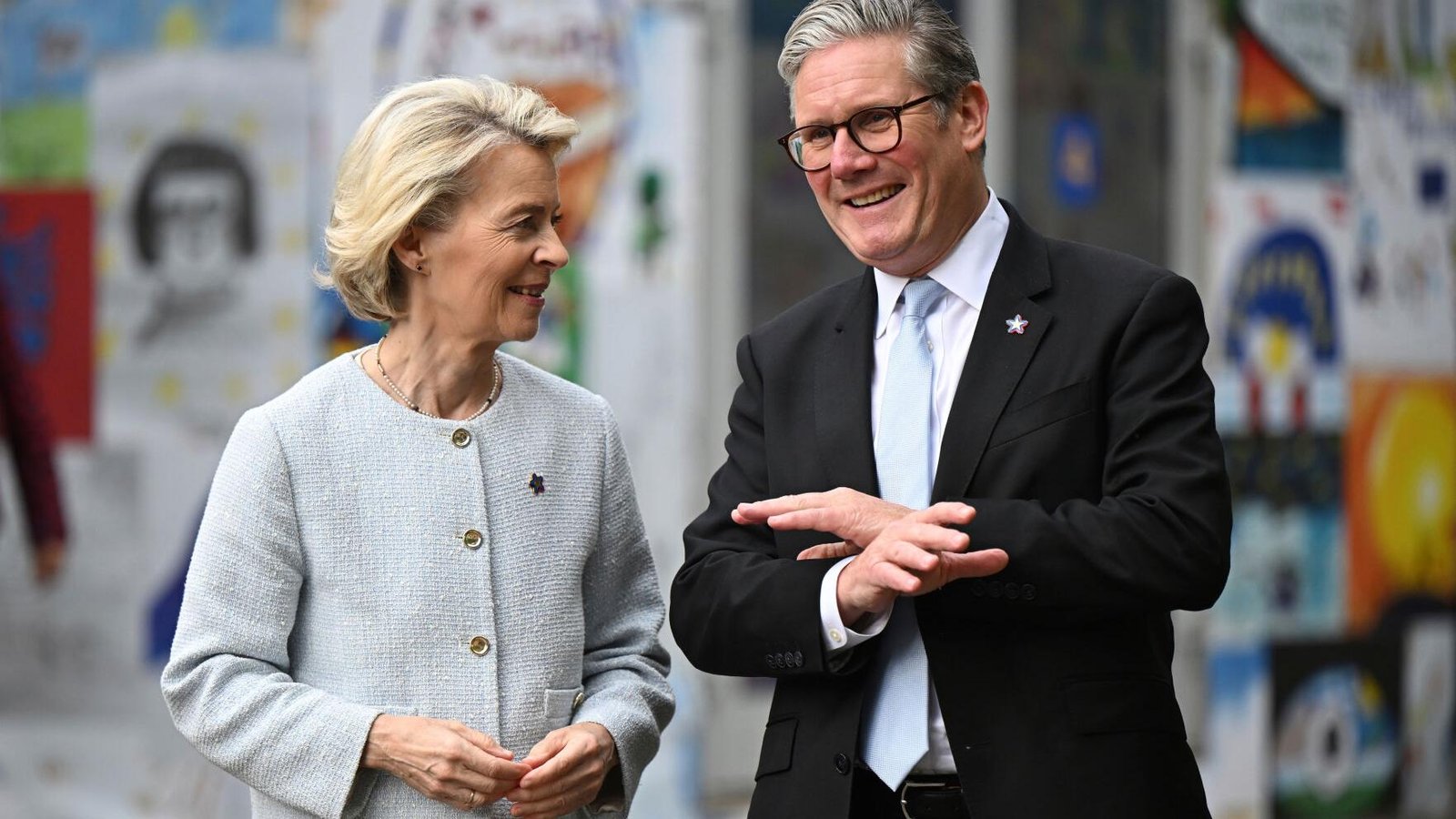

British Prime Minister Keir Starmer is poised to finalise a landmark agreement with the European Union aimed at strengthening bilateral ties, marking the first such summit since the UK’s departure from the bloc five years ago.
According to EU diplomats, both sides reached an agreement after intensive late-night negotiations to settle lingering disputes, including critical issues such as fishing rights and food imports.
The upcoming summit will see the signing of three key documents, most notably the “Security and Defence Partnership,” which outlines plans for deeper cooperation on military and security matters. Starmer will meet with EU leaders Ursula von der Leyen, Antonio Costa, and Kaja Kallas to endorse the pact.
The renewed cooperation reflects the Labour government’s commitment to improving relations with the EU. Starmer has consistently maintained that the existing post-Brexit agreement, arranged under the previous Conservative administration, has failed to deliver benefits for either side. However, he has also emphasized clear limits, including not rejoining the EU customs union or single market.
Negotiations produced a last-minute compromise allowing continued access to UK waters for EU fishing vessels for 12 years following the 2026 expiration of the current agreement. In exchange, the EU will permanently reduce bureaucratic hurdles for British food imports.
A joint declaration affirming European solidarity and a Common Understanding document—covering trade, mobility, and other cooperation—will also be signed. However, the contentious youth mobility issue was left open for future talks, with negotiators agreeing only on vague terms for continued discussion.
The EU-UK talks also take place in a broader geopolitical context. Amid rising security concerns over Russia and uncertainty about future US involvement in European defence under a potential Donald Trump presidency, both London and Brussels are eager to bolster regional security. The defence pact could open the door for the UK to participate in EU missions and benefit from a planned €150 billion European defence fund, although final terms are still under discussion.
The UK’s participation in NATO alongside 23 EU countries made the defence pact the least controversial part of the discussions. Still, experts caution against overestimating the scope of this renewed partnership.
“This is an important step toward better cooperation but doesn’t resolve all the unresolved issues,” said Olivia O’Sullivan from the Chatham House think-tank.
Starmer has expressed openness to aligning with EU food and agricultural standards to reduce trade friction. The UK’s Europe Minister and lead negotiator, Nick Thomas-Symonds, emphasized the need to ease customs checks that have caused significant delays and food spoilage at borders.
While Starmer remains opposed to reinstating full freedom of movement, his government is considering a limited youth mobility scheme that would allow individuals aged 18 to 30 from both sides to study or work across the Channel. The proposal, however, faces political resistance amid growing support for the right-wing Reform UK party led by Nigel Farage.
Thomas-Symonds clarified that any mobility plan would be “smart and controlled” and also called for expedited border processes for British travelers visiting the EU, aiming to reduce holiday delays caused by customs bottlenecks.
