

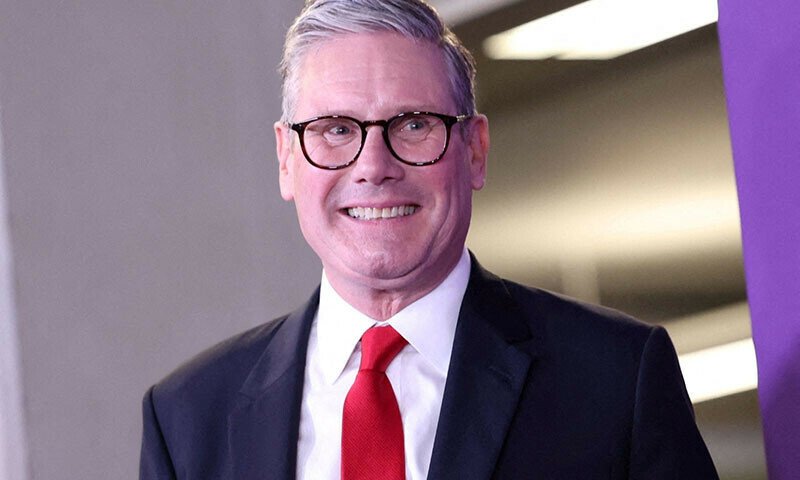

British Prime Minister Keir Starmer has stated that Russian President Vladimir Putin will ultimately have to engage in negotiations, urging global leaders to increase support for Ukraine and sustain diplomatic pressure on Moscow.
During a virtual summit attended by approximately 26 world leaders, Starmer emphasized the need to strengthen Ukraine, secure any ceasefire, and maintain pressure on Russia. He highlighted that Ukrainian President Volodymyr Zelensky had demonstrated Ukraine’s commitment to peace by agreeing to a 30-day unconditional ceasefire.
“Putin is attempting to stall by insisting on a detailed review before a ceasefire can be implemented,” Starmer noted. “But sooner or later, he will have to come to the negotiating table.”
Starmer announced that military leaders would reconvene on Thursday in the UK as the coalition supporting Ukraine advances into its operational phase. “Today’s meeting included more participants than two weeks ago, showing a stronger collective resolve, with new commitments being made,” he added.
Diplomatic Efforts to Pressure Russia
Ukrainian President Volodymyr Zelensky warned that Russia was trying to strengthen its battlefield position before agreeing to any ceasefire. “They seek to improve their standing on the front lines,” he stated in Kyiv.
The ceasefire proposal, reportedly backed by former U.S. President Donald Trump’s team, comes as Russian forces maintain the upper hand in multiple conflict zones across Ukraine. While the U.S. urged an immediate truce, Moscow responded with conditional demands rather than an outright acceptance.
Zelensky accused Putin of “lying” about the complexity of implementing a ceasefire.
French President Emmanuel Macron called for coordinated U.S. and European efforts to pressure Russia into accepting the truce. Meanwhile, European Commission President Ursula von der Leyen stated that Russia must demonstrate its commitment to a “just and lasting peace.”
U.S. Secretary of State Marco Rubio expressed cautious optimism about securing a ceasefire but acknowledged that significant challenges remain.
Continued Fighting and Strategic Moves
Despite ongoing diplomatic discussions, hostilities persisted. Russia claimed to have captured two additional villages in the Kursk region, where it has launched offensives to reclaim territory previously seized by Ukraine.
According to Russia’s defense ministry, its forces took control of Zaoleshenka and Rubanshchina, located near the town of Sudzha, which Moscow recently recaptured. Meanwhile, Ukraine reported that its air force had shot down 130 Russian-launched Shahed drones across 14 regions overnight.
Deployment of Troops and Security Commitments
Starmer and Macron have spearheaded efforts to form a “coalition of the willing,” advocating for continued Western military and logistical support to Ukraine. They argue that security guarantees from this coalition are essential to deter future Russian aggression.
Both leaders have signaled willingness to deploy British and French troops to Ukraine if necessary, although it remains unclear whether other nations would follow suit.
Russia has firmly opposed the presence of foreign peacekeeping forces in Ukraine. However, Macron countered this stance, stating, “If Ukraine requests allied forces on its territory, it is not for Russia to decide.”
While Starmer has welcomed additional support for Ukraine, including logistical and surveillance assistance, some nations remain hesitant. Italian Prime Minister Giorgia Meloni reaffirmed after the summit that Italy has no plans to participate in any ground deployment.
Meanwhile, U.S. President Donald Trump has appointed Keith Kellogg as a special envoy to Ukraine. Kellogg, a former national security adviser, was previously considered for mediation between Ukraine and Russia. However, he was notably excluded from recent peace talks in Saudi Arabia, with reports suggesting that Moscow views him as too supportive of Ukraine.
