


Joint Statement by Western Allies Rejects Israeli Military Plans as Humanitarian Toll Deepens
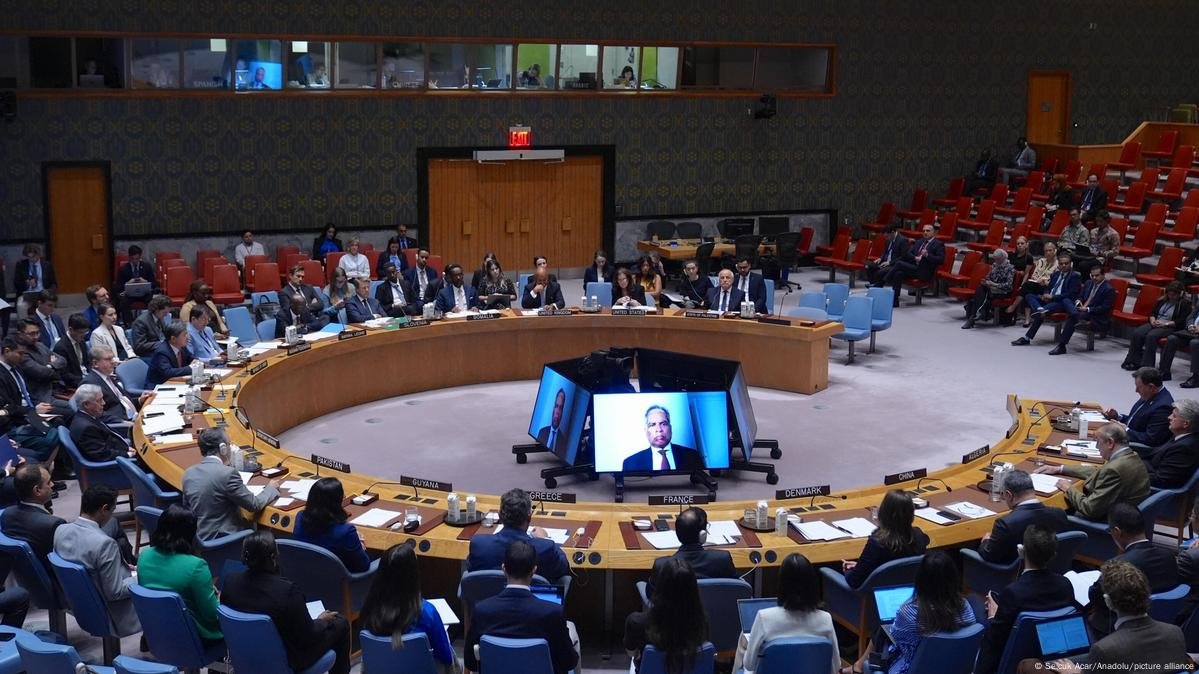
The United Nations Security Council (UNSC) is holding an emergency session today to address growing fears that Israel is preparing to take full military control of Gaza, according to Arab media reports. The meeting was triggered by an urgent request from 14 out of the 15 UNSC member states, an almost unprecedented consensus that reflects mounting global concern over the worsening humanitarian crisis in the region.
Diplomatic sources confirmed that the session will focus on intelligence reports and international media coverage suggesting that Israel is planning a large-scale offensive to consolidate its presence and governance over Gaza. These fears come amid continued efforts by Qatar and Egypt to mediate a ceasefire agreement, which would include the release of hostages and broader peace terms.
Global Pushback Against Israeli Plans
Ahead of the UNSC meeting, five Western countries — the United Kingdom, Australia, Germany, Italy, and New Zealand — released a joint statement strongly rejecting Israel’s alleged military strategy. The nations warned that such an operation would escalate the already dire humanitarian conditions in Gaza, endanger civilian lives, including hostages, and jeopardize regional peace efforts.
The statement also called for:
- An immediate and sustainable ceasefire
- Unhindered humanitarian access to affected areas
- Renewed commitment to a two-state solution
- The unconditional release of all hostages by Hamas
Humanitarian Catastrophe Deepens
While the Security Council deliberates, conditions on the ground in Gaza continue to deteriorate rapidly. Arab media reports state that at least 72 people have been killed in recent Israeli airstrikes, with 16 of them reportedly waiting for humanitarian aid. An additional 314 people were injured.
The humanitarian crisis is further compounded by famine and disease, which have so far claimed 201 lives, including 98 children, as per local health officials. Israeli airstrikes have reportedly targeted refugee camps and aid distribution centers, bringing the total death toll in Gaza to 61,330, with 152,359 others wounded since the escalation began.
Human rights organizations have issued repeated warnings over the severe shortage of food, clean water, medicine, and essential supplies, cautioning that without immediate international intervention, the civilian casualty rate could climb dramatically in the days ahead.
A Critical Juncture for Diplomacy
The emergency session is viewed by many diplomatic observers as a crucial, albeit challenging, moment. While there is broad support for action among UNSC members, deep divisions between global powers over the Israel-Palestine conflict have historically stalled any binding resolutions. Still, the sheer number of countries calling for this meeting signals an urgent push to halt the spiral of violence.
For the millions of civilians trapped in Gaza, the stakes could not be higher — they face continued bombardment, starvation, and systemic collapse, while the world’s most powerful diplomatic body scrambles for consensus.
