

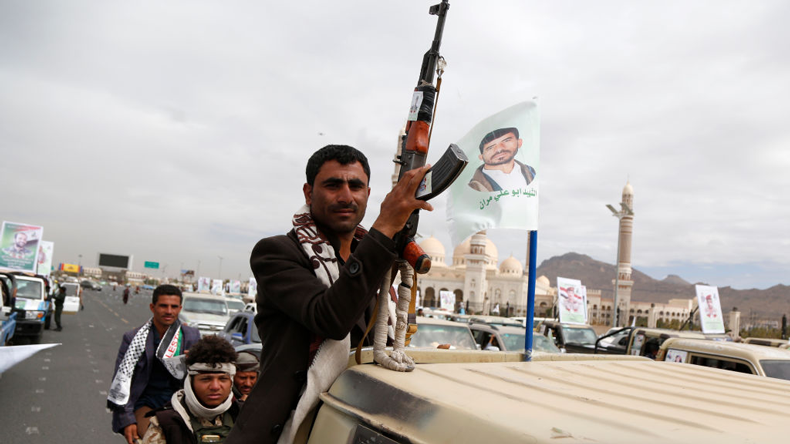

Foreign Terrorist Organization
The United States has officially designated Yemen’s Houthi movement, formally known as Ansar Allah, as a “foreign terrorist organization” (FTO), according to an announcement by the US Department of State.
This designation, reinstated by the Biden administration, brings with it strict sanctions and legal penalties for individuals or entities providing material support to the group.
US Secretary of State Marco Rubio confirmed the decision, emphasizing the growing security threats posed by the Houthis. “The Houthis’ activities threaten the security of American civilians and personnel in the Middle East, the safety of our closest regional partners, and the stability of global maritime trade,” Rubio stated in a press release on Tuesday.
He further warned that the United States would take action against any country or entity engaging with the Houthis under the pretext of conducting legitimate international business.
This move follows a similar designation issued by former President Donald Trump in January during his first term in office. At that time, the Houthis were classified both as a “foreign terrorist organization” and as a “Specially Designated Global Terrorist” (SDGT) entity, imposing severe economic and diplomatic restrictions.
However, soon after taking office, former President Joe Biden reversed the designation, with then-Secretary of State Antony Blinken citing humanitarian concerns. The decision was made to prevent additional hardships for Yemeni civilians, given the country’s already dire humanitarian crisis.
The White House, however, has blamed Biden’s rollback of the FTO status for emboldening the Houthis. It stated that the group’s escalated attacks on commercial and military vessels in the Red Sea, as well as direct assaults on US Navy warships, were a result of what it described as a “weak policy.”
According to the administration, the Houthis have launched more than 100 attacks on commercial ships and have repeatedly targeted US allies’ civilian infrastructure.
The renewed designation signals a shift in Washington’s approach to dealing with the Houthis.
The White House asserted that under Trump’s leadership, the United States now aims to work closely with its regional allies to eliminate the Houthis’ operational capabilities, disrupt their financial resources, and prevent further attacks on US personnel, allies, and international maritime trade.
The move is expected to have significant implications on diplomatic relations in the Middle East.
Saudi Arabia and the United Arab Emirates, both key US allies, have long pushed for a tougher stance on the Houthis, given their continued military operations in Yemen and missile strikes targeting Gulf nations.
Meanwhile, humanitarian organizations have raised concerns that the terrorist designation could complicate aid delivery to Yemen, where millions remain in desperate need of assistance due to ongoing conflict.
As tensions in the region continue to rise, the US government’s latest decision underscores its renewed commitment to countering the Houthis while balancing its diplomatic relationships and humanitarian considerations.
The impact of the designation remains to be seen, but it marks a notable shift in Washington’s strategy toward the Yemeni conflict and regional security.
