

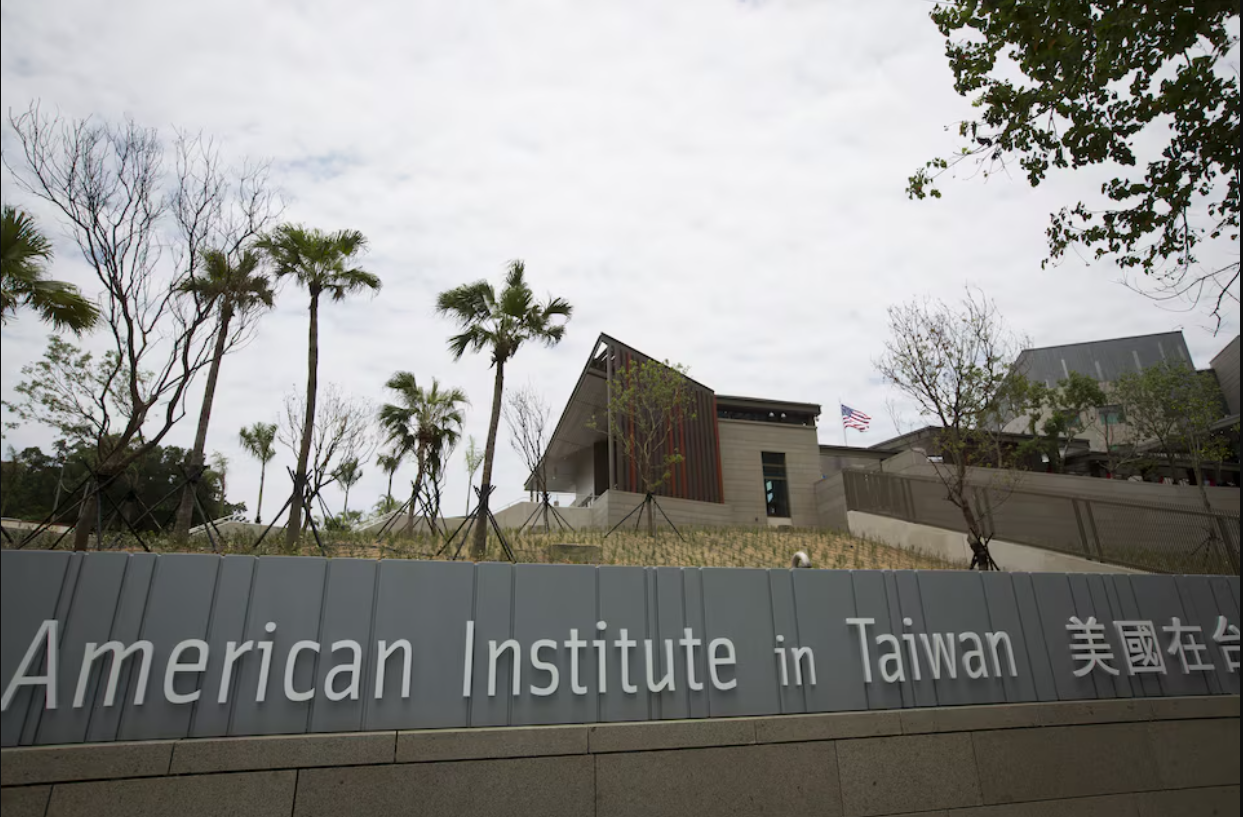

The United States State Department has removed the phrase asserting that the US does not support Taiwan’s independence from its official website. The updated “fact sheet” about Taiwan, a self-governing island claimed by China, no longer includes the statement “we do not support Taiwan independence,” which had previously been part of the page.
The update, which was made Thursday, also revises a section about Taiwan’s participation in international organizations, removing the reference to “where statehood is not a requirement.” It now states that the dispute between Taiwan and China should be resolved “free from coercion, in a manner acceptable to the people on both sides of the Strait.” Additionally, the new version includes a sentence emphasizing the Pentagon’s cooperation with Taiwan’s National Science and Technology Council.
The State Department has downplayed these changes, labeling them as “routine.” A spokesperson explained that the updates were made to provide the public with the latest information regarding the US’s unofficial relationship with Taiwan. Despite the changes, the US remains committed to its “One China Policy,” acknowledging that there is only one Chinese government, and it emphasizes its commitment to “preserving the peace and stability of the Taiwan Strait.”
The spokesperson further reiterated that the US opposes any unilateral alterations to the status quo from either side and supports dialogue across the Taiwan Strait. The changes are viewed by some analysts as a subtle shift in messaging towards China, highlighting Washington’s agency in shaping US-Taiwan relations, rather than allowing Beijing to dictate the terms.
Yang Kuang-shun, co-founder of the US Taiwan Watch think tank, pointed out that the update appears bold, though he clarified that it does not indicate US support for Taiwanese independence. Instead, it underscores the US’s stance on China’s coercive activities towards Taiwan, such as trade sanctions or other grey zone tactics.
While Taiwan functions as a self-governing democracy, it is officially recognized by only a few countries and maintains unofficial relations with much of the world, including the US. Although Taiwan considers itself a de facto independent state, it has not formally declared independence from Beijing, which has consistently warned that any such declaration would lead to war.
The Taiwan Relations Act of 1979 requires the US to assist Taiwan in defending itself, but it does not guarantee military intervention in the event of a Chinese invasion or blockade. Given the sensitivity of US-Taiwan relations, even minor changes to how Taiwan is referenced by US officials are closely monitored by both Beijing and Taipei.
Taiwan’s Ministry of Foreign Affairs expressed appreciation for the updated wording, calling it a reflection of the “close and friendly Taiwan-US partnership.” Taiwanese Foreign Minister Lin Chia-lung thanked the US for its “positive stance” on Taiwan-US relations and its commitment to peace and stability in the Taiwan Strait.
The update follows recent remarks by Taiwanese President Lai Ching-te, who pledged to increase Taiwanese investment in the US as part of efforts to avoid further tariffs on Taiwanese goods. Lai described Taiwan as an “indispensable partner” in helping the US rebuild its high-tech manufacturing sector.
China’s embassies in Washington and Canberra have not yet commented on the updates.
