

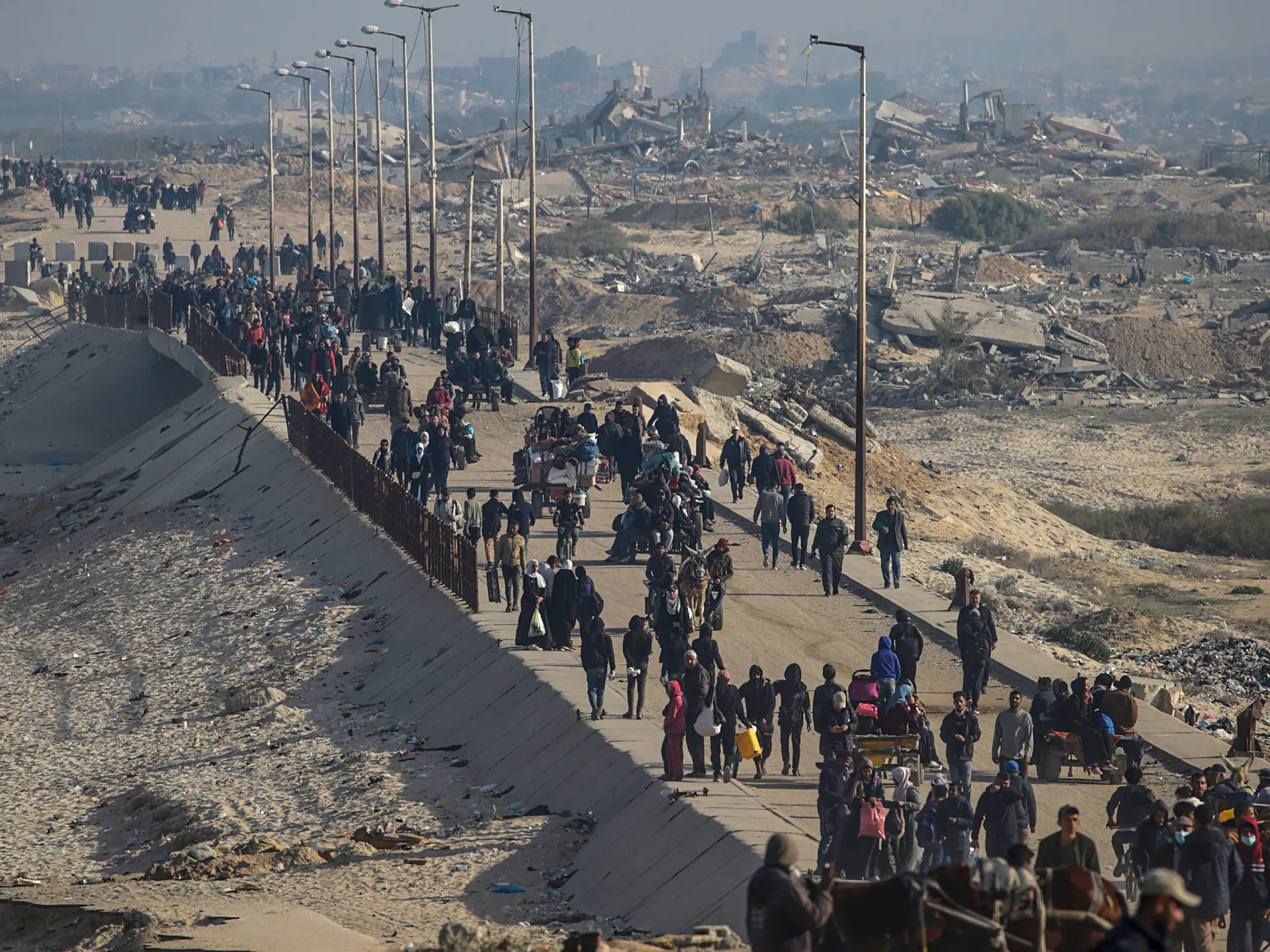

Senior US officials have scaled back key elements of President Donald Trump’s controversial proposal to take control of Gaza and permanently relocate its Palestinian residents following widespread international condemnation and opposition from Middle Eastern nations.
On Tuesday, Trump announced an ambitious redevelopment initiative, suggesting that the US would “take over” and “own” Gaza after relocating its residents, envisioning the enclave as the “Riviera of the Middle East.” His remarks, made after discussions with Israeli Prime Minister Benjamin Netanyahu, marked a stark departure from longstanding US policy on the Israeli-Palestinian conflict.
However, on Wednesday, Secretary of State Marco Rubio sought to temper Trump’s statements, clarifying that the plan was not “hostile” but an offer to oversee reconstruction efforts. He also revised the notion of permanent Palestinian resettlement, saying any displacement would be temporary, allowing for reconstruction and debris removal.
White House Press Secretary Karoline Leavitt echoed this stance, describing Trump’s proposal as innovative while emphasizing that the US would not finance Gaza’s rebuilding or deploy troops. “It’s currently a demolition site, unfit for human habitation,” she said, adding that Trump expected Egypt, Jordan, and other nations to “temporarily” accept Palestinian refugees until Gaza was rebuilt.
Netanyahu praised Trump’s proposal in an interview with Fox News, calling it “the first good idea I’ve heard” and arguing that it could reshape the future of the region. However, he also suggested that Palestinians could return once reconstruction was completed.
Meanwhile, Israeli Defense Minister Israel Katz has reportedly directed the military to develop plans facilitating the departure of Gaza’s residents.
UN and Global Response
The United Nations strongly condemned the proposal, warning that any forced displacement of Palestinians would constitute ethnic cleansing. Secretary-General Antonio Guterres reiterated the fundamental right of Palestinians to live in their homeland, while China firmly rejected Trump’s proposal, affirming its support for Palestinian sovereignty.
Arab leaders also denounced the plan. Egyptian President Abdel Fattah el-Sisi and Jordan’s King Abdullah II warned it would violate international law, undermine the two-state solution, and destabilize the region. Saudi Arabia’s Crown Prince Mohammed bin Salman also rejected any forced relocation of Palestinians, reaffirming the Kingdom’s commitment to Palestinian statehood.
Palestinian leaders, including Mahmoud Abbas and Hamas, condemned the proposal, vowing that Gaza’s residents would not be displaced. Locals echoed this sentiment, with 72-year-old Khan Younis resident Fathi Abu al-Saeed declaring his demolished home “more precious than the United States and everything in it.”
After over 15 months of relentless Israeli bombardment that has claimed more than 61,000 Palestinian lives, Gaza lies in ruins. A ceasefire, brokered on January 19 with efforts led by Trump’s Middle East envoy Steve Witkoff, remains in place as negotiations continue on its extension.
