

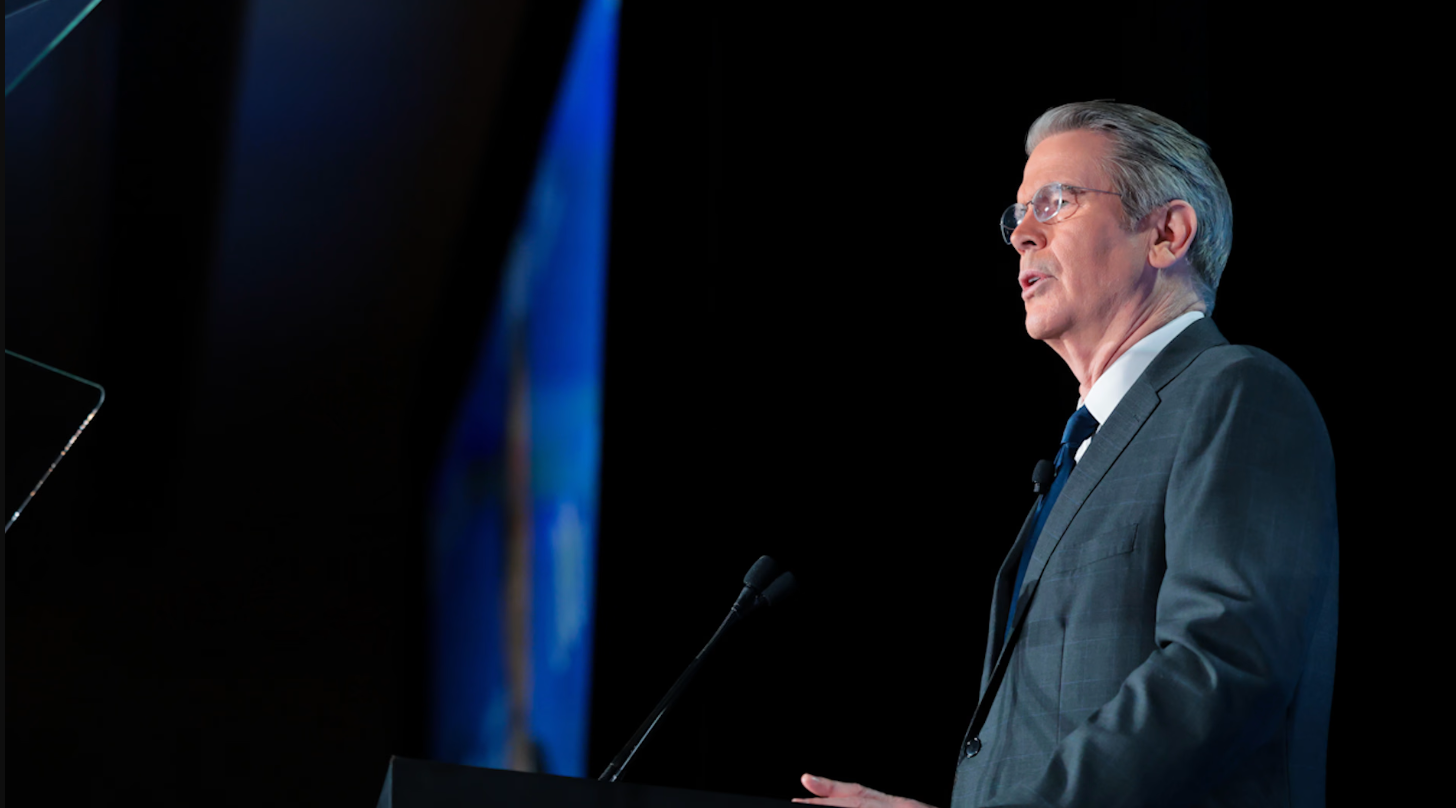

US Treasury Secretary Scott Bessent emphasized the potential for a major trade agreement with China despite heightened tensions between the two powers, stating that economic decoupling is not inevitable, though still a possibility.
Speaking in Buenos Aires just days after Argentina secured a new loan agreement with the International Monetary Fund, Bessent expressed disappointment over remarks by China’s commerce minister, who reportedly dismissed former President Donald Trump’s tariffs as a “joke.” Bessent countered that the tariffs were a serious measure, stating, “These are big numbers. I think no one who thinks they’re sustainable wants them to remain here.”
In an interview with Bloomberg TV, Bessent highlighted the complexity of negotiating with Beijing compared to other countries, citing China as both the United States’ primary economic rival and leading military competitor. “There’s a big deal to be done at some point,” he noted, suggesting that a trade resolution is possible if both sides engage constructively.
The ongoing trade standoff began during Trump’s presidency, which saw the imposition of sweeping tariffs on Chinese imports. In response, Beijing enacted its own set of tariffs, escalating tensions. The U.S. now imposes tariffs up to 145 percent on Chinese goods, while China has retaliated with a 125 percent tariff band on American products.
The current administration has sent mixed signals about its trade objectives. While certain electronics like smartphones, laptops, and semiconductors were recently granted tariff exemptions, Trump and his top aides clarified these would be temporary as new tariffs are being considered.
Trump took to Truth Social to emphasize his hardline stance, stating, “NOBODY is getting ‘off the hook’… especially not China which, by far, treats us the worst!”
Meanwhile, Chinese President Xi Jinping, during his visit to Vietnam as part of a Southeast Asia tour, condemned protectionist policies. He urged countries to resist unilateral pressure and support the stability of global trade systems, warning that a trade war would bring no winners.
The escalating trade tensions are rattling financial markets, contributing to a falling dollar and a sell-off of U.S. government bonds—traditionally viewed as safe investments. Despite this, the White House insists that Trump remains hopeful about reaching a deal, though officials suggest the next move must come from China.
