


Japan’s ruling Liberal Democratic Party (LDP) will hold a leadership election on Friday to choose a successor to Prime Minister Fumio Kishida, whose three-year term ends this month. Kishida has announced he will not seek reelection, opening the door for a new party leader.
Kishida, who has been in office since October 2021, is stepping down amid a political funds scandal and controversies surrounding connections between the Unification Church and ruling party lawmakers. Despite his attempts to reform the party, including breaking up internal factions, his approval rating has plunged to around 20%.
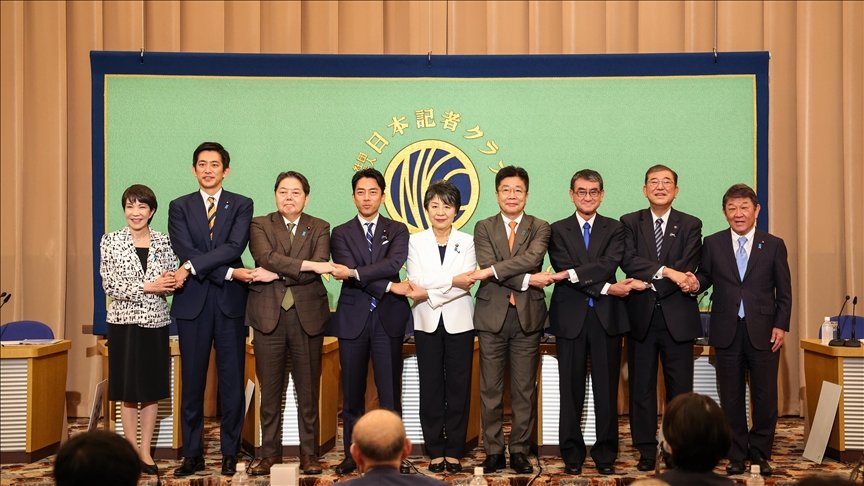
A record nine candidates, including two women, are competing to replace Kishida, as both the LDP and its coalition partner, Komeito, control Japan’s parliament.
If no candidate wins a majority of the 734 votes—367 from LDP lawmakers and 367 from party members—a runoff between the top two contenders will be held the same day. In the runoff, lawmakers will vote again with 367 votes, while 47 votes will be cast by party members, one for each of Japan’s 47 prefectures.
Key Candidates
As the contenders present their visions for Japan, the world’s fourth-largest economy, they all emphasize party renewal, alongside addressing the rising cost of living and security threats from China and North Korea.
Former Defense Minister Shigeru Ishiba, Foreign Minister Yoko Kamikawa, and Shinjiro Koizumi, son of former Prime Minister Junichiro Koizumi, are considered frontrunners in the race.
Ishiba, 67, a seasoned politician with expertise in security, agriculture, and regional revitalization, is making his fifth and final attempt to become party leader, describing it as the “culmination” of his 38-year career. “In the face of public distrust, I will work to regain the people’s trust,” Ishiba said during a televised debate with the other candidates.
Shinjiro Koizumi, 43, a rising star in the LDP, is seen by some as lacking the experience of his rivals, but others see his potential. He has promised to push for reforms to modernize the job market and has suggested holding snap elections if elected to seek a public mandate.
Yoko Kamikawa, 71, one of the two female candidates, comes from a moderate faction that has produced five prime ministers, including Kishida. She, along with Chief Cabinet Secretary Yoshimasa Hayashi, is considered a key contender.
Digital Minister Taro Kono, 61, a political maverick known for his social media presence, was among the first to enter the race. He previously lost to Kishida in the 2021 LDP leadership contest and has vowed to restore the party’s image by addressing global challenges.
Chief Cabinet Secretary Yoshimasa Hayashi, 63, is making his second bid for leadership. An expert in diplomacy, education, and agriculture, Hayashi describes himself as a steady hand in times of crisis.
Conservative Candidates
Several conservative lawmakers, aligned with the vision of slain former Prime Minister Shinzo Abe, are also in the race. Economic Security Minister Sanae Takaichi, 63, running for the second time, has pledged to make Japan “stronger and richer” and is seen as a close ally of Abe.
However, the conservative vote may be divided. Former Economic Security Minister Takayuki Kobayashi, 49, and former Health Minister Katsunobu Kato, 68, both first-time candidates and Abe allies, have joined the contest as well. Kobayashi expressed determination, stating, “Where there’s a will, there’s a way.”
Finally, LDP Secretary General Toshimitsu Motegi, 68, is also considered a strong candidate. A former foreign minister, Motegi has distanced himself from a government tax plan, winning support by opposing tax hikes to fund increased defense spending.
The election results will shape the future direction of Japan’s ruling party and the nation’s policies as Kishida steps down.
