


YouTube Channels
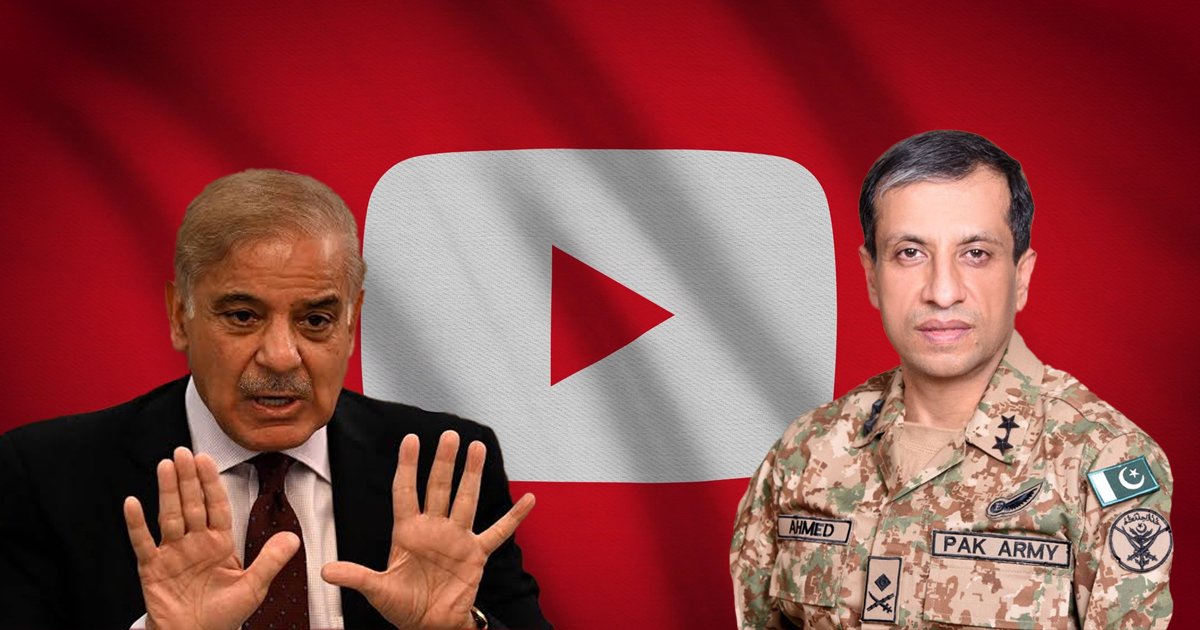
Amid rising tensions between India and Pakistan following the Pahalgam incident, the Indian government has reportedly taken sweeping digital censorship measures by blocking several Pakistani government and military-linked social media accounts, including those of Prime Minister Shehbaz Sharif and the Inter-Services Public Relations (ISPR).
According to media reports, Prime Minister Shehbaz Sharif’s official YouTube channel has been made inaccessible in India, and his recent speech delivered at the Pakistan Military Academy in Kakul has been removed. The speech, in which the premier criticized Indian policies and propaganda, was widely aired by Pakistani news outlets.
The takedown was reportedly based on a complaint filed by the Indian government. YouTube issued a notification confirming the removal but stated that the Pakistani side retains the right to appeal.
Sources indicate that the Indian government was particularly unsettled by the speech, as it directly challenged the Indian narrative surrounding the alleged false flag operation in Pahalgam, where 26 people were killed. Islamabad has denied any involvement and called for a neutral investigation.
In addition to blocking the Prime Minister’s channel, Indian authorities have also taken down the YouTube and X (formerly Twitter) accounts of the ISPR after its Director General, Lt Gen Ahmed Sharif Chaudhry, held media briefings on April 29 and 30. In these sessions, he accused India of sponsoring terrorism and launching disinformation campaigns.
Defense Minister Khawaja Asif also confirmed that his Facebook and Instagram accounts have been blocked in India. He asserted that these actions reflect India’s fear of being exposed. “India cannot suppress our narrative by shutting down our social media accounts,” he said, terming the digital clampdown a clear sign of panic in New Delhi.
Surprisingly, even non-political entities were targeted. The Pakistan Super League (PSL) franchise Lahore Qalandars reported that its official Facebook and Instagram pages are now inaccessible in India. No explanation was given, other than a message stating the pages were “not available in India.”
Media and defense analysts believe these actions represent a broader effort by India to control the narrative. A senior media analyst told, “This clampdown on digital platforms reflects India’s discomfort with transparency and accountability. The truth has rattled New Delhi.”
Meanwhile, Pakistani authorities are on high alert to defend against any cyber threats. The Pakistan Telecommunication Authority (PTA) said that the National Telecom Computer Emergency Response Team (CERT) is closely monitoring the country’s web infrastructure. No successful cyberattacks have been reported so far, but the PTA has issued cyber alerts and increased server oversight.
Law enforcement has also stepped up cyber patrolling. According to police sources, 52,778 social media pages have been flagged for spreading anti-state propaganda.
Of these, 11,132 pages have been taken down. Furthermore, 18 terror plots were reportedly thwarted through digital surveillance, with authorities monitoring 54 platforms to trace extremist communications.
In sum, India’s digital blockade and Pakistan’s countermeasures have intensified the already strained relations between the two nuclear-armed neighbors, extending their geopolitical conflict into the digital realm.
