


Zelensky
BRUSSELS: Ukrainian President Volodymyr Zelensky expressed gratitude to European Union leaders on Thursday for their unwavering support for Ukraine, as the bloc convened for crisis discussions in response to US President Donald Trump’s recent shift away from Kyiv and its transatlantic allies.
The high-stakes summit, attended by all 27 EU leaders, was the first since Trump’s explosive meeting with Zelensky last week, following which Washington suspended critical military aid and intelligence sharing that had been instrumental in Ukraine’s defense against the ongoing Russian invasion.
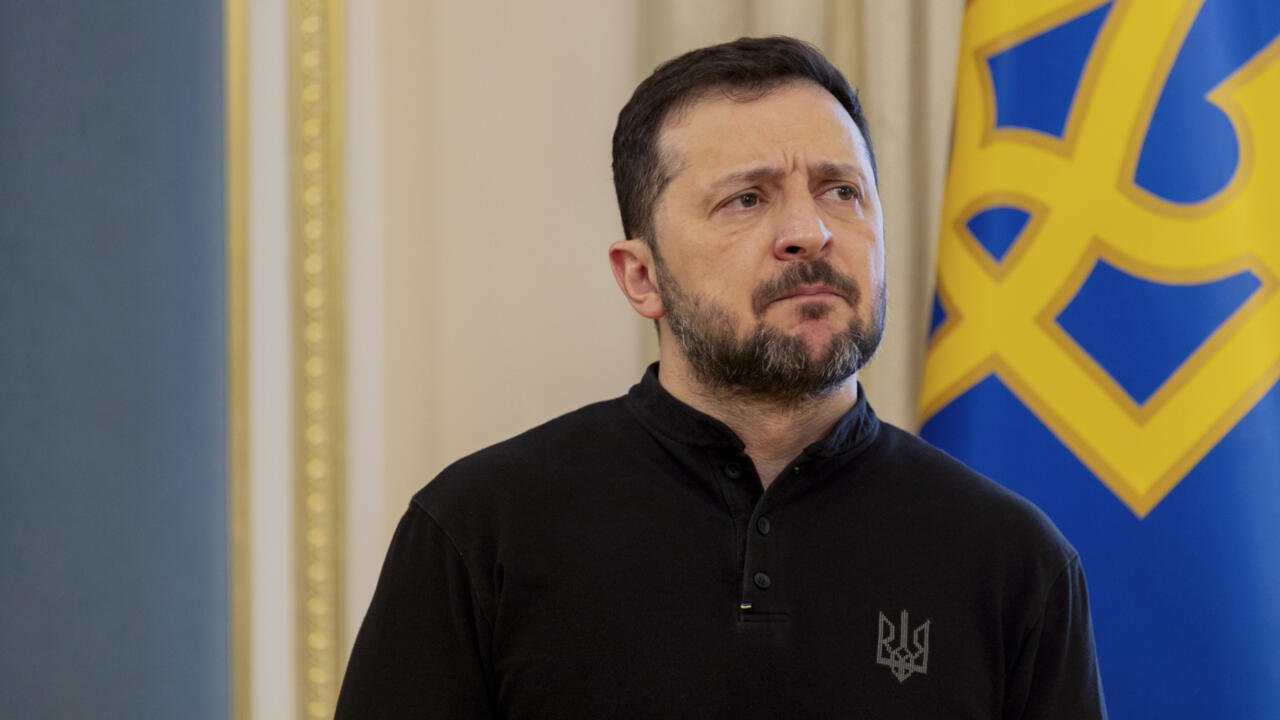
Speaking to reporters alongside European Commission President Ursula von der Leyen and European Council President Antonio Costa, Zelensky acknowledged the EU’s backing. “We are very thankful that we are not alone. And these are not just words,” he remarked, emphasizing Ukraine’s reliance on European support at this crucial juncture.
With uncertainties looming over America’s long-term security commitments in Europe, the EU is facing mounting pressure to bolster its own defense capabilities. Earlier this week, Germany’s expected next leader signaled a historic policy shift toward stronger defense measures.
Von der Leyen underscored the gravity of the situation, describing it as a defining moment for Europe. She presented a comprehensive plan to mobilize €800 billion to enhance the continent’s military preparedness against the Russian threat.
“Europe faces a clear and present danger, and therefore Europe has to be able to protect itself,” she stated. She also highlighted that Ukraine must be empowered to defend itself and work toward achieving a sustainable and just peace.
The EU leaders are anticipated to endorse the Commission’s defense strategy, primarily centered on relaxing spending restrictions to allow member states to invest more significantly in military capabilities.
France’s President Emmanuel Macron, in a solemn national address ahead of the summit, called for a substantial increase in defense spending. He stressed the necessity of preparing for a “new era” in global security, warning that Russia might not stop at Ukraine.
Macron also floated the idea of extending France’s nuclear deterrent to European allies, signaling a potential shift in the continent’s security framework.
Germany’s incoming chancellor, Friedrich Merz, met with EU leaders in Brussels before the summit and emphasized his readiness for the “worst-case scenario,” advocating for a major overhaul of Germany’s defense policies.
Meanwhile, Zelensky’s visit to Brussels follows his efforts to reestablish diplomatic ties with Washington after the recent fallout. He expressed a willingness to work toward a peace deal under Trump’s “strong leadership” and finalize an agreement granting the US access to Ukraine’s valuable mineral resources.
However, Germany’s outgoing leader, Olaf Scholz, cautioned against any settlement that could compromise Ukraine’s sovereignty, reaffirming Europe’s stance against a “dictated peace.”
Trump’s outreach to Russian President Vladimir Putin, bypassing both Kyiv and European allies, has triggered alarm across the EU. This development has also drawn the United Kingdom closer to its European neighbors despite Brexit, with Prime Minister Keir Starmer collaborating with Macron to bridge gaps between Trump and Zelensky.
At a recent meeting in London, European leaders, including NATO’s Secretary-General and non-EU partners such as Turkey, expressed unity with Ukraine. Starmer is expected to be briefed on the outcome of the Brussels summit on Friday.
France and the UK have proposed a one-month ceasefire covering air, sea, and energy infrastructure and are calling for a “coalition of the willing” to assist in securing a potential truce. Turkey has signaled its readiness to play a role in peacekeeping efforts.
During the summit, European leaders will also discuss broader security assurances for Ukraine, which may include deploying European troops—an option supported by several member states but firmly rejected by Russia.
Despite the show of solidarity, significant new aid announcements for Ukraine are not expected. Instead, leaders will reaffirm their commitment to the €30 billion already pledged for 2024, arguing that current funds should be sufficient to meet Kyiv’s needs despite the abrupt halt of US assistance.
